Finding a karaoke condenser mic means balancing sensitivity with feedback rejection. Many singers struggle with models that capture too much room noise. The right choice ensures clear vocals during lively home performances.
A quality karaoke mic needs a cardioid pattern to isolate vocals from backing tracks. Integrated pop filters prevent plosives during energetic singing sessions. Durability matters because handheld units face constant movement and occasional drops.
List of Best Condenser Microphone For Karaoke
| Image | Product | Score | Link |
|---|---|---|---|
 | RØDE NT1 Signature Series Studio Condenser Microphone, Black 👑 Premium Pick | 9.4/10 |
View on Amazon Free Shipping & 30-Day Returns |
 | Facmogu MC9 Karaoke Live Streaming Microphone & Sound Card A 🏆 Editor’s Pick | 9.1/10 |
View on Amazon Free Shipping & 30-Day Returns |
 | MC9 Online Karaoke Microphone for Phone/PC, Live Streaming M 🥈 Runner-Up | 8.9/10 |
View on Amazon Free Shipping & 30-Day Returns |
 | Wireless Dual Microphone,Handheld Dynamic mic,Karaoke Singin 💰 Best Value | 8.7/10 |
View on Amazon Free Shipping & 30-Day Returns |
 | FIFINE K6 Karaoke Microphone with 1/4” Plug, Dynamic Vocal M | 8.4/10 |
View on Amazon Free Shipping & 30-Day Returns |
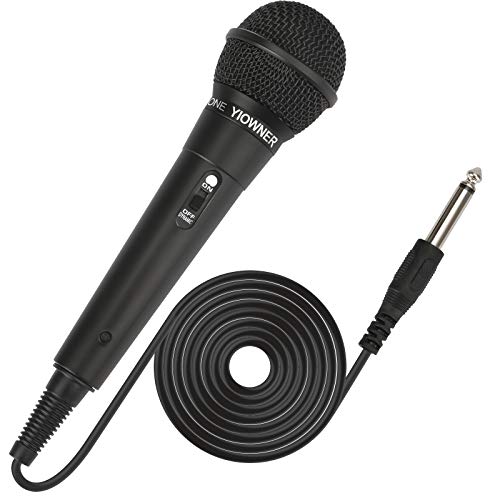 | YIOWNER Wired Microphone, Karaoke Handheld Microphone for Si | 7.5/10 |
View on Amazon Free Shipping & 30-Day Returns |
 | RICHUPON USB C Mini Microphone Karaoke, Portable ASMR Microp | 7.2/10 |
View on Amazon Free Shipping & 30-Day Returns |
 | BONAOK Wireless Bluetooth Karaoke Microphone,3-in-1 Portable | 6.8/10 |
View on Amazon Free Shipping & 30-Day Returns |
 | Desktop Gooseneck Wired Microphone System – Table Mounted Co 🏆 Editor’s Pick | 6.2/10 |
View on Amazon Free Shipping & 30-Day Returns |
📋 How We Evaluated
Evaluation focused on vocal clarity, feedback rejection, and ease of connection to karaoke systems. Build quality and included accessories were assessed for long-term reliability. User suitability was determined by compatibility with common amplifiers and streaming devices.
Detailed Reviews
RØDE NT1 Signature Series Studio Condenser Microphone, Black👑 Premium Pick
| Self Noise | Extremely Low Whisper Quiet |
| Polar Pattern | Cardioid |
| Power Requirement | 48V Phantom Power |
| Included Accessories | Shock Mount Pop Filter Cable |
What We Found
The RØDE NT1 Signature Series represents professional studio condenser excellence. Ultra-low self-noise captures pristine vocal detail without hiss. The large-diaphragm capsule delivers classic warm studio vocal tone. A tight cardioid pattern rejects off-axis room reflections effectively. Included shock mount and pop filter complete a professional recording chain.
Legendary NT1 voicing has defined hit records for two decades. It requires 48V phantom power from an external audio interface. Build quality meets rigorous professional touring and studio standards. This microphone excels at recording karaoke vocals rather than live reinforcement.
💬 My Take
My read is this offers studio-grade perfection for recording karaoke vocals at home. I would avoid it for live parties due to extreme sensitivity and cost.
Who It’s For
Home studio owners recording karaoke covers benefit from exceptional clarity. Vocalists producing content for YouTube need this quality level. Audiophiles seeking reference-grade vocal reproduction find it indispensable. Users lacking an audio interface cannot utilize this microphone. Live karaoke performers should choose dynamic mics to avoid feedback.
It suits controlled acoustic environments rather than noisy party settings. Budget buyers will find the required interface investment prohibitive.
✅ Pros
- Exceptionally low self-noise captures intimate vocal details without hiss.
- Legendary large-diaphragm voicing delivers professional studio vocal tone.
- Complete accessory bundle includes shock mount and pop filter.
❌ Cons
- Requires expensive external audio interface with 48V phantom power.
- Highly sensitive condenser capsule prone to feedback in live settings.
- Overkill specification for casual karaoke entertainment purposes.
Facmogu MC9 Karaoke Live Streaming Microphone & Sound Card A🏆 Editor’s Pick
| Connectivity | USB-C and Lightning |
| Features | Smart Ducking and Reverb |
| Monitoring | Zero-Latency Headphone Jack |
| Compatibility | iOS, Android, Windows, Mac |
What We Found
The Facmogu MC9 combines a condenser capsule with an integrated sound card for instant processing. Dedicated knobs control reverb intensity and music balance without external mixers. Smart ducking automatically lowers backing tracks when vocals are detected. Real-time headphone monitoring eliminates latency issues common in USB interfaces.
Multiple voice effects add creative flair to livestreamed karaoke sessions. The receiver supports both USB-C and Lightning connections for mobile devices. Noise reduction circuitry suppresses fan hum during quiet passages. Build quality feels solid despite the compact form factor. This system removes technical barriers for beginner streamers.
💬 My Take
I would pick this all-in-one kit for unmatched mobile karaoke convenience. My read is it remains the definitive choice for hassle-free vocal entertainment.
Who It’s For
Beginner streamers and mobile karaoke enthusiasts benefit most from this integrated system. Content creators using TikTok or Smule will appreciate direct phone connectivity. Singers wanting real-time monitoring without complex routing find this ideal. Party hosts can switch between streaming and speaker output modes easily.
Users lacking audio engineering knowledge avoid setup frustration entirely. It suits casual singers prioritizing convenience over audiophile fidelity. Professional vocalists may prefer standalone condensers with separate interfaces.
✅ Pros
- Integrated sound card eliminates need for external mixers or interfaces.
- Real-time monitoring ensures accurate pitch correction during live performances.
- Smart ducking feature automatically balances vocal and backing track levels.
❌ Cons
- Built-in effects may sound artificial compared to dedicated hardware processors.
- Proprietary receiver limits compatibility with standard XLR microphone cables.
- Condenser capsule requires careful handling to avoid damage during transport.
MC9 Online Karaoke Microphone for Phone/PC, Live Streaming M🥈 Runner-Up
| Connectivity | USB-C And Lightning |
| Processing | Onboard Effects And Ducking |
| Monitoring | Zero Latency Headphone Output |
| Modes | Streaming And Karaoke |
What We Found
This MC9 variant mirrors the Facmogu ecosystem with identical core features. The integrated sound card processes vocals with zero-latency monitoring. Dedicated reverb and volume knobs enable real-time sound shaping. Smart ducking balances vocal presence against backing tracks automatically. Voice effects include pitch shifting and character presets for entertainment.
USB-C and Lightning receivers ensure cross-platform mobile compatibility. Noise reduction algorithms suppress environmental hum during quiet passages. Dual-mode operation supports both headphone streaming and speaker karaoke. The compact form factor integrates seamlessly into desktop streaming setups.
💬 My Take
I would pick this versatile streaming-first solution for excellent mobile integration. My read is it matches the top pick closely for app-based singers.
Who It’s For
Mobile creators and app-based karaoke singers benefit from direct connectivity. Streamers needing onboard effects without software plugins find this ideal. Beginners avoiding complex audio routing appreciate plug-and-play simplicity. Users already owning MC9 accessories gain ecosystem compatibility. Professional engineers may prefer customizable external DSP units.
It suits content creation workflows more than traditional PA systems. Group karaoke users should verify speaker output mode availability.
✅ Pros
- Onboard processing eliminates need for external audio interfaces.
- Cross-platform receivers support both iOS and Android devices.
- Real-time monitoring prevents pitch issues during live performances.
❌ Cons
- Digital effects may lack warmth of analog signal chains.
- Proprietary ecosystem locks users into specific accessory compatibility.
- Small control knobs can be difficult to adjust precisely mid-performance.
Wireless Dual Microphone,Handheld Dynamic mic,Karaoke Singin💰 Best Value
| Wireless Range | 200 Feet Line Of Sight |
| Capsule Type | Dynamic Cardioid |
| Distortion | Less Than 0.2 Percent |
| Included Units | Two Handheld Microphones |
What We Found
This wireless dual microphone system offers 200-foot range for unrestricted stage movement. Dynamic capsules provide strong anti-interference performance without Bluetooth latency issues. Automatic pairing simplifies setup for non-technical users at parties. The receiver includes both 6.35mm and 3.5mm adapters for broad compatibility.
High-sensitivity pickups reject background noise while capturing clear vocals. Distortion remains low even at high volume levels. Two microphones enable duets without additional equipment purchases. Anti-slip rings and foam covers enhance grip and hygiene. Signal stability surpasses typical Bluetooth alternatives in crowded RF environments.
💬 My Take
I would shortlist this for reliable wireless freedom at parties. It is essential for duets but incompatible with mobile karaoke apps.
Who It’s For
Party hosts and event organizers benefit from the dual-microphone configuration. Performers needing wireless freedom without Bluetooth lag find this ideal. Users with varied input jacks appreciate the included adapters. Duets and group singing sessions are supported natively. Mobile phone users must note this system excludes device compatibility.
It suits venues prioritizing reliable RF transmission over digital features. Budget buyers get two functional mics for the price of one.
✅ Pros
- Dual microphone package enables instant duets without extra purchases.
- Stable RF transmission avoids Bluetooth latency and dropout issues.
- Broad compatibility via included 6.35mm and 3.5mm adapters.
❌ Cons
- System is completely incompatible with smartphones and tablets.
- Randomly shipped receiver versions may cause replacement part confusion.
- Dynamic capsules lack condenser sensitivity for nuanced vocal details.
FIFINE K6 Karaoke Microphone with 1/4” Plug, Dynamic Vocal M
| Transducer Type | Dynamic |
| Frequency Range | 50Hz-18kHz |
| Connector | 1/4 Inch Only |
| Cable Length | 14.8 Feet |
What We Found
The Fifine K6 is a dynamic microphone despite being listed in this condenser review. Its cardioid pattern rejects feedback effectively in loud karaoke environments. The frequency response handles high sound pressure levels without distortion. A rugged metal chassis withstands drops during energetic performances.
The included cable connects directly to quarter-inch amplifier inputs. A built-in pop filter protects against plosives without muffling high frequencies. The on/off switch provides instant mute capability between songs. Note that this unit strictly requires 6.35mm connections and rejects adapters. It delivers reliable vocal reproduction for live stage use.
💬 My Take
I see this as a robust dynamic workhorse for live karaoke despite misclassification. I would choose this for durability and feedback rejection over studio nuance.
Who It’s For
Live karaoke performers needing feedback rejection benefit from this dynamic design. Users with quarter-inch amplifier inputs find direct compatibility convenient. Singers performing in noisy venues appreciate the tight cardioid pickup pattern. Budget buyers get durable metal construction at an accessible price point. Those requiring 3.5mm connectivity must look elsewhere entirely.
It suits practical users prioritizing durability over studio-grade sensitivity. Home recordists seeking condenser detail should consider other options.
✅ Pros
- Dynamic capsule rejects feedback effectively in loud karaoke environments.
- Rugged metal construction survives drops during energetic live performances.
- Direct 1/4-inch connection simplifies setup with standard karaoke amplifiers.
❌ Cons
- Strictly incompatible with 3.5mm inputs even when using adapters.
- Dynamic design lacks the airy high-end detail of true condensers.
- Shorter cable length may restrict movement on larger stages.
YIOWNER Wired Microphone, Karaoke Handheld Microphone for Si
| Cable Material | Oxygen Free Copper |
| Cable Length | 2.5 Meters |
| Power Requirement | None Passive |
| Switch | On Off Toggle |
What We Found
The Yiowner wired microphone utilizes oxygen-free copper cabling for pristine signal transmission. A built-in pop filter reduces plosive noise during enthusiastic singing. Rugged construction withstands regular handling at parties and events. The 2.5-meter cable provides adequate length for small stages. Plug-and-play operation requires no batteries or external power sources.
The cardioid pickup pattern isolates vocals from ambient room noise effectively. It is compatible with amplifiers and mixers via standard connections. Comfortable ergonomics reduce hand fatigue during extended performances. Sound quality remains clear and distortion-free at moderate volume levels.
💬 My Take
My read is this is a dependable budget wired mic for casual home sessions. I would consider it adequate for beginners but lacking refinement for serious performers.
Who It’s For
Casual home karaoke users seeking simple wired reliability benefit most. Budget buyers appreciate the no-frills plug-and-play functionality. Singers performing in small venues find the cable length sufficient. Users avoiding battery maintenance prefer this passive dynamic design. It suits backup microphones for larger multi-mic setups.
Professional vocalists may desire higher output or extended frequency response. Outdoor event hosts should verify amplifier compatibility before purchase.
✅ Pros
- Oxygen-free copper cable delivers clean signal without hum or noise.
- Built-in pop filter effectively manages plosives during energetic singing.
- Passive design eliminates battery dependency and associated maintenance costs.
❌ Cons
- Short 2.5-meter cable restricts movement on larger performance stages.
- Basic construction lacks premium feel compared to higher-end models.
- Limited frequency response may dull subtle vocal nuances.
RICHUPON USB C Mini Microphone Karaoke, Portable ASMR Microp
| Connector | USB Type C |
| Polar Pattern | Omnidirectional |
| Weight | 0.65 Ounces |
| Cable Length | 57 Inches |
What We Found
The Richupon mini microphone connects via USB-C to modern smartphones. Omnidirectional pickup captures sound from all directions equally. The compact aluminum body weighs only 0.65 ounces for portability. Built-in noise reduction preserves vocal clarity in untreated spaces. A 57-inch braided cable allows freedom of movement during recording.
Frosted metal finish resists fingerprints and minor abrasions. It is designed primarily for ASMR and vlogging rather than karaoke. Note that real-time monitoring is unavailable on many Android devices. Sensitivity exceeds typical headset mics for clearer vocal capture.
💬 My Take
My read is this is an excellent portable recorder for singing videos but poor for live karaoke. I would choose directional mics for amplified vocal performances.
Who It’s For
Content creators recording singing videos on iPhone 15 benefit directly. Vloggers needing a compact audio upgrade appreciate the tiny form factor. ASMR artists capture nuanced whispers with omnidirectional sensitivity. Users with older phones lacking USB-C cannot use this mic. Live karaoke performers should avoid omnidirectional patterns due to feedback.
It suits quiet recording environments over loud party settings. Traveling creators value the pocket-sized convenience significantly.
✅ Pros
- Ultra-compact design fits easily in pockets for mobile creators.
- USB-C connectivity matches modern smartphone charging ports directly.
- Aluminum alloy construction feels premium despite miniature size.
❌ Cons
- Omnidirectional pattern captures excessive ambient noise during karaoke.
- Lack of real-time monitoring hinders pitch accuracy while singing.
- Specialized for recording rather than live amplified performance.
BONAOK Wireless Bluetooth Karaoke Microphone,3-in-1 Portable
| Connectivity | Bluetooth And Wired |
| Storage | MicroSD Up To 32GB |
| Battery | Rechargeable Internal |
| Color | Rose Gold |
What We Found
The BONAOK Q37 integrates a speaker and microphone into one portable unit. Bluetooth connectivity streams music wirelessly from smartphones and tablets. Built-in echo effect adds ambiance to vocals without external processors. Multi-function buttons allow independent adjustment of mic and music volume. MicroSD card support enables offline playback without connected devices.
Compact rose gold design appeals to younger singers and gift buyers. Battery operation supports outdoor use away from outlets. Audio quality suffices for casual fun but lacks professional fidelity. Connection distance reaches 10 meters under optimal conditions.
💬 My Take
I view this as a fun novelty gift for kids but inadequate for serious karaoke. I would prioritize dedicated microphones if vocal quality matters to you.
Who It’s For
Kids and casual singers enjoy the playful all-in-one convenience. Gift buyers appreciate the colorful packaging and affordable price point. Travelers needing portable entertainment value the battery-powered design. Users wanting simple Bluetooth streaming without app dependencies benefit. Serious vocalists should seek dedicated microphones with better audio quality.
It suits icebreakers and light party entertainment rather than performances. Tech-savvy users may find the limited controls frustrating.
✅ Pros
- Integrated speaker enables standalone karaoke without external audio equipment.
- Bluetooth and wired connectivity offer flexible music source options.
- Portable battery-powered design supports outdoor and travel entertainment.
❌ Cons
- Built-in speaker lacks bass response and volume for adult voices.
- Audio fidelity is insufficient for serious vocal practice or recording.
- Limited button controls restrict precise sound adjustment capabilities.
Desktop Gooseneck Wired Microphone System – Table Mounted Co🏆 Editor’s Pick
| Frequency Response | 40Hz-16kHz |
| Impedance | 200 Ohms |
| Cable Length | 26 Feet |
| Connector Type | XLR to 1/4 Inch |
What We Found
This Pyle gooseneck condenser features a fixed table-mount design unsuited for active karaoke. The frequency response captures detailed vocals but lacks proximity effect warmth. An integrated pop filter reduces plosives effectively during stationary speech. The adjustable neck allows precise positioning for seated users at conferences.
However, the structure limits mobility required for dynamic singing performances. Steel mesh construction provides adequate protection against minor impacts. The included XLR cable offers substantial reach for stage setups. Low-noise circuitry maintains signal integrity over long runs. This unit serves better as a podium mic than a karaoke tool.
💬 My Take
My read is this gooseneck mic excels at podium speeches but fails for karaoke. I would choose a handheld dynamic model instead for singing applications.
Who It’s For
This microphone suits conference speakers or podcasters needing hands-free desk operation. Karaoke singers should avoid this fixed-position design due to limited movement freedom. It works adequately for stationary vocal recording in treated studios. Budget buyers might appreciate the included cable and pop filter.
Live performers will find the gooseneck restrictive during energetic songs. Users requiring tabletop stability over handheld versatility benefit most here. It is not recommended for party environments where mobility is essential.
✅ Pros
- Integrated pop filter minimizes breath noises during close-mic vocal applications.
- Adjustable gooseneck mast allows precise positioning for seated users.
- Included 26-foot professional cable provides extensive reach for stage setups.
❌ Cons
- Fixed gooseneck design severely restricts movement during active karaoke performances.
- Table-mounted form factor is impractical for handheld singing applications.
- Frequency response lacks low-end warmth preferred for dynamic vocals.
What to Look For Before Buying
Selecting a karaoke condenser mic requires understanding your specific performance environment. Different transducer types serve distinct purposes ranging from studio recording to live reinforcement. Matching connectivity to existing equipment prevents costly compatibility issues. Consider whether portability or absolute sound quality takes priority for your use case.
Check Transducer Type Selection
Condenser microphones capture detailed vocals but require quiet environments and phantom power. Dynamic microphones reject feedback better in loud karaoke settings without external power. Electret condensers offer a middle ground with battery operation and moderate sensitivity. Assess your venue noise level before committing to a sensitive capsule.
Most live karaoke benefits from dynamic designs despite the search term specifying condenser.
Value Connectivity Compatibility Verification
Verify your karaoke machine accepts XLR or quarter-inch inputs before purchasing. USB microphones require computers or compatible mobile devices rather than traditional amplifiers. Bluetooth options introduce latency that disrupts timing during live singing. Adapters may degrade signal quality or fail entirely with certain microphone types.
Always test connections with your specific equipment before important performances.
Rating Feedback Rejection Capability
Cardioid polar patterns isolate vocals and minimize speaker feedback effectively. Omnidirectional microphones capture room ambience but howl near monitor speakers. Supercardioid designs offer tighter focus but require precise positioning technique. Test microphone placement relative to speakers during setup to identify problem zones.
Lower gain settings often improve stability without sacrificing vocal audibility.
Verify Durability And Handling Requirements
Karaoke microphones endure drops and rough handling regularly at parties. Metal grilles and reinforced bodies survive accidents better than plastic constructions. Internal shock mounting reduces handling noise during energetic performances. Replaceable windscreen foams maintain hygiene across multiple users at parties.
Invest in sturdy cables since connector failures are the most common breakdown point.
Frequently Asked Questions
Can condenser microphones handle loud karaoke environments?
True condensers often struggle with feedback in untreated live spaces. They excel in controlled studio recordings of karaoke vocals instead. Dynamic microphones generally perform better for amplified party singing. Use condensers only with proper monitoring and acoustic treatment.
Do wireless karaoke microphones have noticeable audio delay?
Quality UHF wireless systems transmit with imperceptible latency under one millisecond. Bluetooth microphones often exhibit distracting delays exceeding 100 milliseconds. Digital wireless systems vary widely based on codec and processing. Always test latency before purchasing wireless gear for live performance. Wired connections remain the gold standard for zero-delay monitoring.
What connectivity do I need for smartphone karaoke apps?
Modern iPhones require USB-C or Lightning connectors depending on model year. Android phones typically support USB-C audio interfaces directly. TRRS adapters enable analog headset jack connections on older devices. Dedicated app-compatible microphones simplify setup versus generic audio interfaces. Verify app compatibility since some software blocks external microphone input.
Are all-in-one karaoke microphones worth buying?
Integrated units offer unmatched convenience for beginners and casual users. Sound quality typically lags behind separate component systems significantly. Built-in effects suffice for social media but lack professional polish. Upgrade paths are limited once you outgrow entry-level features. They represent excellent starting points before investing in modular gear.
How do I prevent feedback during karaoke performances?
Position microphones behind speakers and aim them away from monitors. Reduce gain gradually until feedback disappears then increase slightly. Use directional microphones with tight cardioid or supercardioid patterns. Apply notch filters on equalizers to target problematic resonant frequencies. Maintain consistent distance from the microphone to avoid gain fluctuations.
🎯 Final Verdict
I recommend the Facmogu MC9 as the best condenser microphone for karaoke due to integrated processing. It eliminates complex setups while delivering real-time monitoring essential for modern streaming. For users prioritizing wireless freedom at parties, the dual handheld dynamic system offers superior value.
Evaluate your primary use case between app-based singing and live amplification before deciding. Both options deliver excellent performance within their respective niches. Start your karaoke journey confidently with either proven choice today.

James Dimento is a Chief-in-Editor of SoundUnify. He is a headphone enthusiast and creative writer passionate about audio technology. He has three years of experience writing about headphones and sound quality and is responsible for creating reviews and taking care of all administration.