Looking for the best condenser microphone for singing? The category throws real tradeoffs at you: USB plug-and-play versus XLR studio rigs, built-in bundles versus à la carte parts, and self-noise that can make or break a vocal take.
I treated setup simplicity, included accessories, and noise performance as the deciding factors here. Some mics ship with boom arms, pop filters, and cables; others require an interface or phantom power.
List of Best Condenser Microphone For Singing
| Image | Product | Score | Link |
|---|---|---|---|
 | RØDE NT1 Signature Series Studio Condenser Microphone, Black 🏆 Editor’s Pick | 9.2/10 |
View on Amazon Free Shipping & 30-Day Returns |
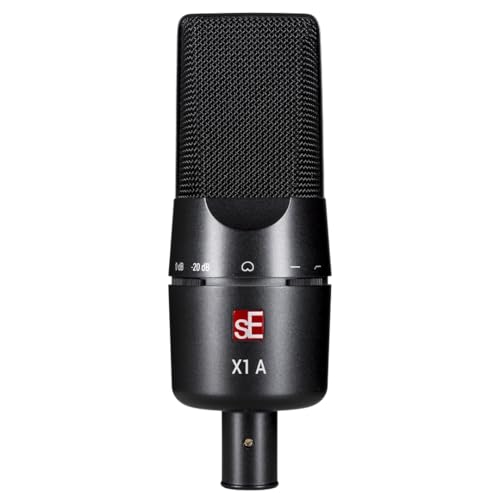 | SE ELECTRONICS X1 A Large Diaphragm Condenser Microphone wit | 8.7/10 |
View on Amazon Free Shipping & 30-Day Returns |
 | Audio-Technica AT2020 Cardioid Condenser Studio XLR Micropho 🥈 Runner-Up | 8.5/10 |
View on Amazon Free Shipping & 30-Day Returns |
 | MAONO PM320S Condenser PC Microphone with XLR Cable, Boom Ar 💰 Best Value | 7.9/10 |
View on Amazon Free Shipping & 30-Day Returns |
 | FIFINE T669 Studio Condenser USB Microphone for Recording Po 💵 Budget Pick | 7.8/10 |
View on Amazon Free Shipping & 30-Day Returns |
 | MA-67 Studio Condenser Microphone, 34mm Gold Large Diaphragm | 7.4/10 |
View on Amazon Free Shipping & 30-Day Returns |
 | FIFINE AmpliGame AM8 USB/XLR Dynamic Microphone for Gaming S | 7.3/10 |
View on Amazon Free Shipping & 30-Day Returns |
 | TONOR PC Microphone with Boom Arm, Kit for Podcast, USB Mic | 7.2/10 |
View on Amazon Free Shipping & 30-Day Returns |
 | FIFINE K669B USB Microphone, Condenser Recording Mic for Voc | 7.0/10 |
View on Amazon Free Shipping & 30-Day Returns |
📋 How We Evaluated
Evaluation considered stated build materials, connection requirements, included accessories, and features relevant to vocal recording. Performance judgments rely on the supplied specifications, not independent listening tests. Amazon rating data and prices were unavailable, so neither could support value comparisons or rating-based conclusions.
Detailed Reviews
RØDE NT1 Signature Series Studio Condenser Microphone, Black🏆 Editor’s Pick
| Microphone type | Large-diaphragm condenser |
| Connection | XLR |
| Polar pattern | Cardioid |
| Included accessories | SM6 shock mount, pop filter, XLR cable, dust cover |
What We Found
The RØDE NT1 Signature Series is an XLR large-diaphragm condenser aimed at vocalists and streamers. Its stated low self-noise suits detailed recording, especially when quiet passages expose microphone hiss.
A tight cardioid pattern focuses capture toward the singer and reduces pickup from the sides and rear, though it cannot eliminate room reflections. The package includes an SM6 shock mount, pop filter, XLR cable, and dust cover, giving buyers several useful studio essentials.
An audio interface or other suitable preamp is still required. RØDE describes the NT1 voicing as a studio staple, but no independent test results or customer ratings were provided here. The included accessories and quiet-design emphasis make this a particularly complete singing setup.
💬 My Take
The NT1 Signature is the strongest all-around pick here for singers who already have an interface. Its bundled vocal accessories and low-noise design make the package unusually practical.
Who It’s For
This microphone suits singers building an interface-based home studio who want a ready-to-position vocal setup. The included mount and pop filter help address desk vibration and plosives, while the cable removes one common purchase from the setup list.
It makes particular sense for recording vocals in a reasonably controlled room, where a sensitive condenser can capture detail without excessive room noise. Buyers without an interface should budget for one before choosing this XLR model. Its value depends on package pricing, which was not supplied.
✅ Pros
- The included SM6 mount and pop filter provide useful vocal-recording accessories from the start.
- RØDE identifies low self-noise as a key strength for capturing quiet vocal details.
- The cardioid pattern helps prioritize a singer positioned in front of the microphone.
❌ Cons
- An audio interface or suitable preamp is necessary because this microphone uses XLR.
- A condenser can capture room reflections, so untreated spaces may color vocal recordings.
- No price or Amazon rating data was available to verify its current value.
SE ELECTRONICS X1 A Large Diaphragm Condenser Microphone wit
| Microphone type | Large-diaphragm condenser |
| Connection | XLR |
| Maximum SPL | 150 dB |
| Controls | Minus-20 dB pad and 100 Hz low-cut filter |
What We Found
The sE Electronics X1 A is an XLR large-diaphragm condenser with practical controls for varied recording sources. Its redesigned capsule is described as balanced and responsive, while the stated maximum SPL reaches 150 dB.
A switchable minus-20 dB pad helps accommodate loud signals, and a 100 Hz low-cut filter can reduce unwanted low-frequency energy. An integrated windscreen is intended to help control plosives without an external filter. These features extend its use beyond singing to loud instruments and general recording.
The provided details do not list a cable, shock mount, or measured self-noise. It still requires an interface or preamp with suitable phantom power, and no rating data was supplied.
💬 My Take
The X1 A is the strongest alternative for singers who value recording controls and high-SPL capability. Confirm the package contents before comparing total cost.
Who It’s For
This microphone suits vocalists who want an XLR studio condenser with controls for both loud sources and low-frequency rumble. The pad and filter offer flexibility when recording powerful singers or nearby instruments, while the built-in windscreen reduces accessory dependence for basic vocal use.
It makes a strong alternative to a more complete bundle when recording flexibility matters more than included hardware. Buyers should budget for an interface and check which accessories are included with their specific package. Its high-SPL rating is useful, but it does not guarantee a preferred vocal tone.
✅ Pros
- A stated 150 dB maximum SPL supports recording very loud sources without exceeding its listed limit.
- The switchable pad and low-cut filter offer practical control over loud signals and rumble.
- An integrated windscreen helps manage plosives without requiring an external filter.
❌ Cons
- An interface or preamp with suitable phantom power is required for operation.
- The supplied details do not confirm whether an XLR cable or shock mount is included.
- No price, Amazon rating, or measured self-noise data was provided.
Audio-Technica AT2020 Cardioid Condenser Studio XLR Micropho🥈 Runner-Up
| Microphone type | Studio condenser |
| Connection | XLR |
| Polar pattern | Cardioid |
| Noted capabilities | High SPL handling, wide dynamic range |
What We Found
The Audio-Technica AT2020 is an XLR cardioid condenser designed for project and home studios. Its listed strengths include high sound-pressure handling, wide dynamic range, and a custom low-mass diaphragm intended to support extended frequency response and transient detail.
The cardioid pattern helps reduce sound pickup from the sides and rear, though the specifications do not promise complete isolation in an untreated room. The supplied product details do not list a shock mount, pop filter, cable, or stand, so accessory costs may add up.
An interface or preamp is needed for XLR recording. No current price, Amazon rating, or independent measurements were provided for this comparison.
💬 My Take
The AT2020 remains a strong conventional studio choice when the recording chain and accessories are already in place. It is less compelling as a complete first microphone kit.
Who It’s For
The AT2020 suits singers who want a recognized project-studio format and already have suitable XLR recording equipment. Its published high-SPL and dynamic-range claims also make it a flexible option for different vocal intensity levels.
A singer recording in a home studio can pair it with a separate pop filter and shock mount as needed. This is less convenient for someone seeking a complete starter bundle or a plug-and-play computer microphone. Check included accessories and interface requirements before comparing its total setup cost.
✅ Pros
- The cardioid pattern is designed to reduce side and rear pickup around the vocal source.
- The manufacturer specifies high SPL handling and a wide dynamic range.
- Its project and home-studio positioning matches common interface-based vocal setups.
❌ Cons
- An XLR interface or suitable preamp is necessary for recording.
- The supplied details do not confirm included accessories such as a pop filter or shock mount.
- No price, customer rating, or independent test measurements were available.
MAONO PM320S Condenser PC Microphone with XLR Cable, Boom Ar💰 Best Value
| Microphone type | XLR condenser |
| Capsule size | 16 mm |
| Power requirement | 48V phantom power |
| Included accessories | Boom arm, metal shock mount, pop filter, windscreen, XLR cable |
What We Found
The MAONO PM320S is an XLR condenser kit with a 16 mm capsule and a stated requirement for stable 48V phantom power. Its cardioid pattern is designed to reduce off-axis pickup, and the listing describes low-noise capture without providing a measured noise figure.
The package includes an XLR cable, metal shock mount, pop filter, foam windscreen, and adjustable metal boom arm. A metal body and folding arm target everyday home-studio use and easier storage.
This feature set covers several basic vocal recording needs, but it still requires an interface, mixer, or preamp that supplies phantom power. No price, ratings, or independent performance data were provided.
💬 My Take
The PM320S bundles useful studio hardware around a specified 16 mm capsule. It is worth considering only when phantom power is already available.
Who It’s For
This kit suits singers who already own a phantom-powered interface and want an XLR microphone with positioning and pop-control accessories. The boom arm can help keep the capsule near the singer while freeing desk space, and the included windscreen offers another option for reducing breath noise.
It may also serve podcasting or voiceover work in a home studio. Buyers should confirm that their preamp supplies stable 48V power before purchasing. Its apparent bundle value cannot be judged against current prices because none were listed.
✅ Pros
- The package includes a boom arm, shock mount, pop filter, and windscreen for vocal setup.
- A stated 16 mm capsule and cardioid pattern offer concrete details for comparing the microphone.
- The metal body and arm are described as suitable for regular home-studio use.
❌ Cons
- Stable 48V phantom power is required, so this is not a direct-to-computer microphone.
- The listing provides no measured self-noise or detailed frequency-response values.
- No price or Amazon ratings were available to substantiate its value positioning.
FIFINE T669 Studio Condenser USB Microphone for Recording Po💵 Budget Pick
| Microphone type | USB condenser |
| Connection | USB-B to USB-A/C cable |
| Polar pattern | Cardioid |
| Included accessories | Boom arm, shock mount, double pop filter, 8.2-foot cable |
What We Found
The FIFINE T669 is a USB condenser kit built around straightforward computer recording. It connects to a PC or laptop without an interface or separate drivers, and its cardioid capsule is intended to emphasize front-facing vocals.
The supplied accessories include a scissor boom arm, shock mount, double-layer pop filter, and an 8.2-foot USB cable. The arm offers 30 inches of reach, with stated horizontal and vertical adjustment, helping position the microphone away from the desk.
The listing describes rugged construction but does not specify capsule size, frequency response, or measured noise performance. Xbox compatibility is explicitly excluded. No customer ratings or price were provided, so the kit’s cost advantage cannot be confirmed.
💬 My Take
The T669 is a practical starter bundle when computer simplicity matters most. Its limited published acoustic detail makes it harder to recommend for serious vocal comparisons.
Who It’s For
The T669 fits first-time singers who record directly to a computer and want a boom arm included. Its USB setup avoids buying an audio interface, while the pop filter and shock mount cover common home-recording needs.
It can also suit voiceovers, calls, and streaming when a single microphone serves several tasks. Singers seeking a traditional interface-based studio chain should look elsewhere. The product listing does not establish detailed acoustic performance, so demanding vocalists may prefer a model with fuller published specifications.
✅ Pros
- Direct USB connection simplifies setup for computer recording without an audio interface.
- The boom arm, shock mount, and double pop filter form a substantial included accessory bundle.
- The arm’s stated 30-inch reach supports flexible positioning around a recording desk.
❌ Cons
- The listing excludes Xbox, limiting compatibility with some gaming setups.
- Important acoustic specifications, including capsule size and measured self-noise, are not stated.
- USB-only operation offers less flexibility for conventional XLR studio equipment.
MA-67 Studio Condenser Microphone, 34mm Gold Large Diaphragm
| Microphone type | XLR condenser |
| Capsule size | 34 mm gold large-diaphragm capsule |
| Power requirement | 48V phantom power |
| Included accessories | Metal shock mount, hydro pop filter, 6-foot XLR cable, pouch |
What We Found
The MA-67 is an XLR condenser microphone built around a stated 34 mm gold large-diaphragm capsule. Its listing describes a warm, detailed vocal sound, but those tonal claims are not supported by independent measurements here. The microphone requires 48V phantom power, so it needs a compatible interface, mixer, or preamp.
The metal body and grille are presented as durable, and the package includes a metal shock mount, hydro pop filter, six-foot XLR cable, and carrying pouch. Those accessories provide a useful starting point for vocals and podcasting.
The supplied details do not give a polar pattern, frequency response, or maximum SPL. Price and Amazon rating information were unavailable.
💬 My Take
The MA-67 offers an appealing accessory bundle and a large stated capsule. Missing core specifications make it a riskier choice than better-documented studio options.
Who It’s For
This microphone may suit singers who want a large-diaphragm XLR condenser and appreciate having a pop filter, shock mount, cable, and pouch included. Its stated 34 mm capsule is a useful comparison point, although capsule diameter alone cannot predict recording quality or tonal fit.
The bundled components may simplify a home-studio setup for someone with phantom-powered equipment. It is not a plug-and-play USB choice. Buyers should verify the polar pattern and full specifications before using it in a room where background noise is a concern.
✅ Pros
- The stated 34 mm capsule and gold finish provide clear product details for comparison.
- The package includes a shock mount, pop filter, XLR cable, and carrying pouch.
- A metal body and grille are specified as part of its construction.
❌ Cons
- The microphone requires 48V phantom power and cannot connect directly over USB.
- The supplied details omit its polar pattern, frequency response, and maximum SPL.
- Warm tonal claims are not backed by independent measurements or rating data here.
FIFINE AmpliGame AM8 USB/XLR Dynamic Microphone for Gaming S
| Microphone type | Dynamic |
| Connections | USB and XLR |
| Frequency response | 50 Hz-16 kHz |
| USB controls | Tap-to-mute, gain, headphone monitoring, RGB |
What We Found
The FIFINE AmpliGame AM8 is a dynamic microphone with both USB and XLR connections, so it differs from the condenser models in this comparison. Its stated 50 Hz to 16 kHz frequency response and cardioid pickup suit close-miked speech and vocals.
The manufacturer recommends a recording distance of two to six inches. USB operation adds tap-to-mute, a mute indicator, headphone monitoring, gain control, and RGB lighting. Several controls and lighting features become inactive over XLR, and a separate XLR cable is not included.
Dynamic pickup may be a sensible choice in a noisy room, but the supplied specifications do not establish singing tone or measured rejection.
💬 My Take
The AM8 is a capable-looking hybrid streaming option, but it is not the right pick for shoppers specifically seeking a condenser. Consider it when noisy-room rejection and USB features take priority.
Who It’s For
The AM8 suits singers who also stream, game, or record spoken content and want one microphone for multiple workflows. USB offers convenient muting and monitoring, while the XLR connection provides an upgrade path to a separate interface.
Close working distance is important, so it may not suit singers who prefer to move freely while performing. Buyers should account for a separate XLR cable and understand that USB-only features disappear on XLR. Its dynamic design also makes it a different tonal and sensitivity choice from a condenser.
✅ Pros
- USB and XLR connections support both simple computer use and a later interface-based setup.
- USB operation includes tap-to-mute, headphone monitoring, and a gain control.
- The dynamic design and close-miking guidance can suit noisier recording spaces.
❌ Cons
- The AM8 is dynamic, not a condenser, so it does not match the requested microphone type.
- A separate XLR cable is needed, and the listing says it is not included.
- RGB and several function controls are unavailable when using the XLR connection.
TONOR PC Microphone with Boom Arm, Kit for Podcast, USB Mic
| Microphone type | USB microphone |
| Connection | Type-C |
| Included accessories | Cantilever arm, integrated shock mount, pop filter |
| Body material | Zinc alloy |
What We Found
The TONOR TC20Air is a USB microphone kit with a Type-C port, touch-to-mute control, and a colored status indicator. It connects to computers without drivers or an external sound card, according to the listing.
The kit includes a flexible cantilever arm, integrated shock mount, and a pop filter designed to stay positioned during adjustments. Its zinc-alloy body is described as durable and corrosion-resistant. The product claims compatibility with laptops, PCs, PS4, PS5, and smartphones, while excluding Xbox.
The supplied features do not specify capsule size, polar pattern, frequency response, or recording noise. No price or Amazon ratings were available to clarify how its bundle compares with alternatives.
💬 My Take
The TC20Air offers useful desk convenience, but its acoustic specifications leave major questions unanswered. Prioritize it for setup features, not proven vocal performance.
Who It’s For
This model fits singers who want convenient computer recording and an adjustable arm without assembling a separate accessory kit. The touch mute and visible indicator may also help during streaming, calls, and voiceovers.
Its stated smartphone compatibility could suit creators who record on supported mobile devices, but buyers should confirm the required connection for their phone. The listing does not provide enough acoustic detail to predict performance for demanding vocal work.
It is best approached as a convenience-focused USB option rather than a documented studio reference.
✅ Pros
- Driver-free USB connection is designed for straightforward computer setup.
- The adjustable arm, integrated shock mount, and pop filter support a ready-to-use desk arrangement.
- Touch-to-mute control includes a visible indicator for checking microphone status.
❌ Cons
- The listing does not specify a polar pattern, capsule size, or frequency response.
- Xbox is explicitly excluded, and mobile compatibility may depend on the device connection.
- No price or customer-rating data was available to evaluate its competitive value.
FIFINE K669B USB Microphone, Condenser Recording Mic for Voc
| Microphone type | USB condenser |
| Connection | USB-A |
| Cable length | 5.9 feet |
| Included accessories | Tripod stand |
What We Found
The FIFINE K669B is a compact USB condenser with a metal body, tripod stand, and built-in volume control. It connects directly to a computer over USB-A, with a stated 5.9-foot cable, and does not need 48V phantom power.
Its cardioid pattern is intended to focus on a nearby voice, making it suitable for basic singing, calls, or streaming. The included tabletop tripod is simpler than a boom arm and offers less positioning flexibility.
The product description says it also works with PS4 and PS5, but excludes Xbox and phones. No capsule size, frequency response, or measured noise figure is supplied, and no rating data was available.
💬 My Take
The K669B is a straightforward desktop microphone, not a flexible studio centerpiece. Choose it for uncomplicated computer recording rather than detailed vocal production.
Who It’s For
This microphone suits beginners who want a small, direct USB setup for casual singing, online meetings, or voice recording. The physical volume knob makes quick level changes convenient, while the mute-to-zero behavior can help with privacy.
Its tripod works best when the microphone can sit close to the singer on a stable desk. It is less suitable for a flexible studio arrangement or an interface-based recording chain. Buyers should verify their device connection and cable reach before relying on it for a particular setup.
✅ Pros
- USB power makes setup simple without an interface or separate phantom-power supply.
- The on-microphone volume knob supports quick adjustments during recording or calls.
- The metal construction provides a sturdier body than a lightweight plastic microphone.
❌ Cons
- The compact tripod provides less placement flexibility than a boom arm.
- The listing excludes phones and Xbox, despite broader computer and console compatibility.
- Limited published acoustic specifications make vocal performance difficult to assess in advance.
What to Look For Before Buying
Start with the recording chain, because a microphone that cannot connect to your equipment adds unnecessary cost. Then match the microphone type and pickup pattern to your room and singing style. Compare the accessories included, not just the capsule claims.
Finally, treat ratings and prices as evidence only when current, verifiable data is available.
Check Match the Connection to Your Setup
USB microphones connect directly to compatible computers and usually avoid a separate interface. XLR models need an interface, mixer, or preamp. Many XLR condensers also require 48V phantom power. Check your device ports and power support before ordering. Include any missing hardware in your total cost.
Value Assess the Full Vocal Kit
A pop filter helps reduce plosive bursts from close singing. A shock mount can limit vibration reaching the microphone from a desk or stand. A boom arm offers more placement flexibility than a small tripod. Confirm whether the package includes a cable and windscreen.
Compare the complete setup cost, not just the microphone price.
Rating Fit the Microphone to the Room
Cardioid microphones are designed to favor sound from the front. They do not remove room reflections or noise picked up from behind the singer. Condensers can reveal vocal detail, but untreated rooms may sound distracting.
A dynamic microphone can suit close recording in a noisier space, though it is a different microphone type. Position the singer close to the capsule and test the room before recording a full take.
Verify Check Evidence and Compatibility
Look for stated polar pattern, frequency response, maximum SPL, and self-noise figures. Separate measurable specifications from broad claims about warmth or studio quality. Check current customer ratings for recurring complaints, but do not treat them as controlled audio tests. Confirm compatibility with your operating system, console, or phone.
Verify current package contents and price before comparing value.
Frequently Asked Questions
Do condenser microphones need an audio interface for singing?
USB condensers can connect directly to compatible computers. XLR condensers typically need an interface, mixer, or preamp. Many XLR models also require 48V phantom power. Check the microphone’s exact power and connection requirements before buying.
Is a condenser microphone suitable for an untreated bedroom?
It can work, but a condenser may capture room reflections and background noise alongside the voice. A cardioid pattern helps focus pickup toward the singer, but does not eliminate the room. Use soft furnishings, reduce nearby noise, and test positioning.
A dynamic microphone may be a better fit in a noisy space.
What accessories help when recording vocals?
A pop filter helps control plosives, while a shock mount can reduce stand or desk vibration. A boom arm improves positioning, and a compatible cable completes an XLR setup. Check which items the package actually includes. An interface is also necessary for most XLR microphones.
What is the difference between USB and XLR microphones?
USB models connect directly to compatible computers and usually simplify setup. XLR models connect through an interface, mixer, or preamp and can fit into a broader recording chain. The best choice depends on your equipment and future plans. Confirm compatibility and required power before purchasing.
Can one microphone handle singing, streaming, and podcasting?
Many microphones can serve all three uses, particularly when they offer a suitable pickup pattern and flexible placement. USB models can simplify computer streaming, while XLR models fit interface-based studio recording. Accessories and room acoustics affect results as much as the product label.
Match the microphone to your primary use first.
🎯 Final Verdict
The RØDE NT1 Signature Series is the strongest overall choice for singers who have, or plan to buy, an audio interface. Its low-noise design, cardioid pattern, SM6 shock mount, pop filter, and included XLR cable make a coherent recording package.
The sE Electronics X1 A is a compelling alternative for singers who need a switchable pad, low-cut filter, and high-SPL handling. Neither pick eliminates the need to consider room acoustics and interface costs. Check current pricing, package contents, and compatibility before choosing your vocal setup.

James Dimento is a Chief-in-Editor of SoundUnify. He is a headphone enthusiast and creative writer passionate about audio technology. He has three years of experience writing about headphones and sound quality and is responsible for creating reviews and taking care of all administration.