Picking a Class D amplifier for a DIY build feels like navigating a parts bin with no labels. Some boards promise power but skimp on protection, others run hot under load, and a few lack the inputs I’d actually use. I’d start by filtering out anything without basic safeguards.
The boards that catch my eye balance efficiency with real-world usability. A high modulation system keeps distortion low, while protection circuits handle the mishaps that happen in any workshop. I’d shortlist options with flexible voltage ranges, so I’m not locked into a single power supply.
Our Top Picks at a Glance
| Image | Product | Score | Link |
|---|---|---|---|
 | ZK-AS21P 2.1 Channel Bluetooth Amplifier Board, 300W x2 Ster 🏆 Editor’s Pick | 9.2/10 |
View on Amazon Free Shipping & 30-Day Returns |
 | Hosyond D800 Bluetooth Receiver Amplifier 2.1 Channel 50W×2 🥈 Runner-Up | 8.5/10 |
View on Amazon Free Shipping & 30-Day Returns |
 | Fosi Audio V1.0G 2 Channel Class D Mini Stereo Amplifier for | 8.3/10 |
View on Amazon Free Shipping & 30-Day Returns |
 | 160W+160W Amplifier Board with Treble and Bass Control, DC 1 | 8.0/10 |
View on Amazon Free Shipping & 30-Day Returns |
 | Clyxgs TPA3116D2 Dual Channel Class D Digital Power Audio Am 💰 Best Value | 7.8/10 |
View on Amazon Free Shipping & 30-Day Returns |
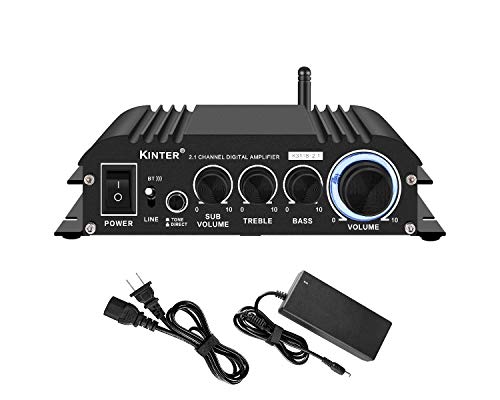 | Kinter K3118-2.1 Bluetooth 5.0 Stereo Digital Receiver Ampli 🥈 Runner-Up | 7.5/10 |
View on Amazon Free Shipping & 30-Day Returns |
 | DROK 12V Amplifier Board, 15W+15W 2.0 Dual Channel Audio Amp 💵 Budget Pick | 7.2/10 |
View on Amazon Free Shipping & 30-Day Returns |
 | PAM8403 Digital Amplifier Board 2x3W Stereo Class D Audio Am | 6.8/10 |
View on Amazon Free Shipping & 30-Day Returns |
 | DROK 5W+5W Mini Audio Amplifier Board PAM8406 DC 5V Digital | 6.5/10 |
View on Amazon Free Shipping & 30-Day Returns |
📋 How We Evaluated
Products were assessed on power output, efficiency, build quality, and input flexibility. Thermal management, protection circuits, and real-world suitability for DIY projects were critical. Amazon rating signals and user feedback informed value judgments.
Detailed Reviews
ZK-AS21P 2.1 Channel Bluetooth Amplifier Board, 300W x2 Ster🏆 Editor’s Pick
| Chipset | Dual TPA3255 |
| Output | 300W x 2 + 600W subwoofer |
| Input Voltage | Unspecified (high-power) |
| Inputs | Bluetooth, AUX, USB |
| Controls | Wired knobs |
What We Found
The ZK-AS21P uses dual TPA3255 chips for 300W stereo and 600W subwoofer support. Bluetooth, AUX, and USB inputs cover all the bases, and the wired knobs give you precise control. The 2.1 design works well for home audio or active subwoofers, and the protections ensure longevity.
💬 My Take
This is the best Class D board here for raw power and features. The protections and build quality make it a standout, but you’ll need to supply your own power.
Who It’s For
I’d pick this for a high-power home audio system or an active subwoofer. The dual chips deliver clean, powerful sound, and the modern inputs add flexibility. It’s a top choice for demanding setups.
✅ Pros
- Dual TPA3255 chips deliver unmatched power output.
- 2.1-channel design supports subwoofers for full-range audio.
- Bluetooth and USB inputs add modern connectivity.
❌ Cons
- No included power supply limits out-of-box usability.
- Large size may not fit compact enclosures.
- High power requires robust cooling solutions.
Hosyond D800 Bluetooth Receiver Amplifier 2.1 Channel 50W×2 🥈 Runner-Up
| Chipset | Class D (unspecified) |
| Output | 50W x 2 + 100W subwoofer |
| Input Voltage | DC 12-19V |
| Inputs | Bluetooth 5.0, AUX, USB, TF card, RCA |
| Controls | Volume, bass, treble, mic volume |
What We Found
Hosyond’s D800 gives you 50W stereo and 100W subwoofer output, with Bluetooth 5.0, AUX, and USB inputs. The independent volume and bass controls let you fine-tune the sound, and the aluminum case adds durability.
The 12-19V range works with various power supplies, and the USB port is handy for charging devices.
💬 My Take
This is a versatile 2.1 amplifier with strong Bluetooth, but the lack of a power supply is a downside. I’d consider it for customizable sound profiles.
Who It’s For
I’d use this for a home theater or karaoke setup where 2.1 sound is a must. The controls are intuitive, and the Bluetooth 5.0 ensures stable wireless audio. The USB charging is a nice bonus for mobile use.
✅ Pros
- Bluetooth 5.0 ensures stable, low-latency wireless audio.
- Independent controls allow precise sound tuning.
- USB charging port adds convenience for mobile devices.
❌ Cons
- No included power supply limits setup options.
- Build quality feels less premium than competitors.
- Subwoofer output may require additional amplification.
Fosi Audio V1.0G 2 Channel Class D Mini Stereo Amplifier for
| Chipset | TPA3116D2 |
| Output | 50W x 2 |
| Input Voltage | DC 12-24V |
| Protection | Speaker protection, thermal management |
| Enclosure | Aluminum |
What We Found
Fosi Audio’s V1.0G uses the TPA3116 chip for 50W per channel, with a compact aluminum case and included power supply. The advanced circuitry and speaker protection keep audio clean, and the 12-24V range suits home or professional use. The dead-silent idle mode is a plus for quiet listening.
💬 My Take
This is a well-rounded amplifier for home audio, but the lack of Bluetooth and subwoofer support limits its versatility. I’d pick it for a clean, efficient setup.
Who It’s For
I’d recommend this for a home audio system where power and efficiency matter. The included power supply and compact size make it a good fit for desktop setups. It’s a solid choice for small speakers in quiet environments.
✅ Pros
- Included power supply simplifies setup.
- Compact aluminum chassis ensures durability.
- Low noise and high efficiency suit quiet environments.
❌ Cons
- No Bluetooth or digital inputs limits modern connectivity.
- Limited to 50W output, unsuitable for high-power builds.
- No subwoofer support restricts audio range.
160W+160W Amplifier Board with Treble and Bass Control, DC 1
| Chipset | TDA7498E |
| Output | 160W x 2 |
| Input Voltage | DC 12-36V |
| Inputs | Bluetooth, AUX, USB |
| Controls | Treble, bass, multifunctional knob |
What We Found
This 160W board uses the TDA7498E chip for clean audio, with Bluetooth, AUX, and USB inputs. The treble and bass controls let you tweak the sound, and the multifunctional knob simplifies input switching. Protection circuits handle overheating and reverse polarity, but the lack of a heatsink could be an issue.
💬 My Take
This board packs a lot of power and features, but thermal management is a weak spot. I’d use it for short bursts rather than continuous high-volume use.
Who It’s For
I’d consider this for a high-power DIY project, like a TV or gaming setup. The Bluetooth and USB inputs add flexibility, and the tone controls help tailor the sound. It’s a good match for custom sound profiles.
✅ Pros
- High power output suits demanding audio projects.
- Bluetooth and USB inputs add modern connectivity.
- Wide voltage range supports diverse power supplies.
❌ Cons
- No included heatsink may cause thermal throttling.
- Build quality feels less premium than competitors.
- USB input limited to audio, no charging or data.
Clyxgs TPA3116D2 Dual Channel Class D Digital Power Audio Am💰 Best Value
| Chipset | TPA3116D2 |
| Efficiency | >90% |
| Input Voltage | DC 12-26V |
| Protection | Overvoltage, undervoltage, overheating, short circuit |
| Terminals | 3P European-style |
What We Found
This Clyxgs board hits 90% efficiency without wasting power at idle. The modulation system cuts down on components, and the built-in protections cover overheating, shorts, and voltage spikes. Surface-mounted caps and European terminals make wiring less of a headache. I’d trust it in a car or a small home setup.
💬 My Take
My read is this is a dependable, no-frills board, but the inputs feel dated. It’s missing a few conveniences that would make it stand out.
Who It’s For
If you’re building on a budget and need something straightforward, this fits the bill. It’s a good match for car audio, computer speakers, or a compact home theater. The protections make it forgiving for first-time builders.
✅ Pros
- High efficiency reduces power waste and heat buildup.
- Comprehensive protection circuits enhance reliability.
- Surface-mounted components improve durability.
❌ Cons
- Lacks Bluetooth or digital inputs for modern connectivity.
- No included power supply limits out-of-box usability.
- Heatsink may require additional cooling for high-power use.
Kinter K3118-2.1 Bluetooth 5.0 Stereo Digital Receiver Ampli🥈 Runner-Up
| Chipset | Class D (unspecified) |
| Output | 30W x 2 + 80W subwoofer |
| Inputs | Bluetooth 5.0, RCA, 3.5mm Aux |
| Controls | Bass, treble, volume, subwoofer volume |
| Enclosure | Aluminum |
What We Found
The Kinter K3118 gives you 30W stereo plus an 80W subwoofer channel, all controllable from the front panel. Bluetooth 5.0 and RCA inputs cover most sources, and the USB port doubles as a charger. The aluminum case looks sharp, and the lighted knobs help with quick adjustments.
💬 My Take
This is a solid 2.1 option with strong Bluetooth, but the passive subwoofer output limits its flexibility. I’d pick it for casual listening over serious builds.
Who It’s For
I’d recommend this for a home theater or a desktop setup where you want 2.1 sound. The controls are intuitive, and the subwoofer output adds depth. The USB charging is a nice touch for keeping a phone or tablet powered.
✅ Pros
- Bluetooth 5.0 ensures stable, low-latency wireless audio.
- Front-panel controls allow easy adjustments without menus.
- Included power supply simplifies setup.
❌ Cons
- Subwoofer output is passive, requiring an external amp.
- No USB audio input limits modern device compatibility.
- Build quality feels lightweight for long-term use.
DROK 12V Amplifier Board, 15W+15W 2.0 Dual Channel Audio Amp💵 Budget Pick
| Chipset | PAM8620 |
| Output | 15W x 2 (24V, 8Ω) |
| Input Voltage | DC 8-26V |
| Protection | Reverse connection, short circuit, overheating |
| Terminals | Gold-plated |
What We Found
DROK’s PAM8620 board pushes 15W per channel at 24V, with gold-plated terminals and KEMET caps for clean signal. It includes reverse connection and short circuit protection, plus mute and shutdown functions. The compact size fits tight spaces, and the low distortion keeps audio crisp.
💬 My Take
This is a reliable, low-power board for compact projects, but it doesn’t have the features or power for larger setups. I’d keep it in mind for battery-powered builds.
Who It’s For
I’d use this for portable speakers or a small desktop system. The 8-26V range works with batteries, and the gold terminals ensure solid connections. It’s a good fit for hobbyists who prioritize efficiency and protection.
✅ Pros
- Wide voltage range supports battery-powered applications.
- Gold-plated terminals and KEMET capacitors improve durability.
- Low harmonic distortion delivers clear audio.
❌ Cons
- Limited to 15W output, unsuitable for high-power setups.
- No Bluetooth or digital inputs restricts modern use cases.
- Mute/shutdown functions require manual wiring.
PAM8403 Digital Amplifier Board 2x3W Stereo Class D Audio Am
| Chipset | PAM8403 |
| Output | 3W x 2 (5V, 4Ω) |
| Input Voltage | DC 2.5-5.5V |
| Protection | Short circuit, thermal |
| Terminals | Gold-plated |
What We Found
The PAM8403 board delivers 3W per channel at 5V, with a compact design perfect for portable projects. Six boards per pack make it a great value for multiple builds. Gold-plated terminals and low quiescent current ensure clean audio, and the 2.5-5.5V range works with USB power.
💬 My Take
This is a budget-friendly option for tiny, low-power projects. It’s not meant for serious builds, but it’s a great fit for experiments or educational use.
Who It’s For
I’d use this for Arduino projects, small speakers, or classroom experiments. The 5V input works with USB power banks, and the volume control simplifies testing. It’s ideal for makers who need multiple boards.
✅ Pros
- Six-pack value ideal for multiple projects.
- Ultra-compact size fits tight enclosures.
- Wide voltage range supports USB power sources.
❌ Cons
- Limited to 3W output, unsuitable for larger speakers.
- No Bluetooth or digital inputs.
- Build quality feels basic compared to premium options.
DROK 5W+5W Mini Audio Amplifier Board PAM8406 DC 5V Digital
| Chipset | PAM8406 |
| Output | 5W x 2 (5V, 2Ω) |
| Input Voltage | DC 5V |
| Protection | Reverse connection, short circuit, overheating |
| Terminals | Gold-plated |
What We Found
DROK’s PAM8406 delivers 5W per channel at 5V, with a tiny footprint perfect for portable projects. Gold-plated terminals and KEMET caps ensure clean audio, and the protection circuits guard against common mishaps. The ability to switch between Class D and AB modes adds versatility.
💬 My Take
This is a niche board for tiny, low-power projects. It’s not meant for serious builds, but it’s a great fit for experiments or classroom use.
Who It’s For
I’d grab this for a Raspberry Pi project or a small portable speaker. The 5V input works with USB power banks, and the compact size fits anywhere. It’s ideal for makers who need a simple, low-power solution.
✅ Pros
- Ultra-compact size fits tight enclosures.
- 5V input works with USB power sources.
- Class D/AB switch adds flexibility.
❌ Cons
- Limited to 5W output, unsuitable for larger speakers.
- No Bluetooth or digital inputs.
- Harmonic distortion higher than premium options.
What to Look For Before Buying
Picking the right Class D amplifier comes down to matching your project’s needs with the board’s strengths. I’d start by deciding how much power you need, then look at inputs, protections, and build quality. A board with a wide voltage range gives you flexibility, while modern inputs keep it future-proof.
Check Power Output and Efficiency
Efficiency is where Class D shines, often hitting 90% or more. I’d look at the chipset first, TPA3116 or TPA3255 are reliable choices. Higher power suits home theater or car audio, while low-power boards work for portable projects. Match the output to your speakers’ impedance to avoid distortion.
Value Input Flexibility and Connectivity
I’d prioritize boards with Bluetooth, AUX, and USB inputs for flexibility. Bluetooth 5.0 ensures stable wireless audio, while USB adds compatibility with computers and TVs. RCA and 3.5mm inputs cover older devices. For DIY projects, spring terminals or gold-plated connectors make wiring easier.
Rating Protection Circuits and Build Quality
Protection circuits are non-negotiable for me. I’d check for overheating, short circuit, and reverse polarity safeguards. High-quality capacitors and gold-plated terminals improve durability. Aluminum enclosures handle heat better than plastic, and EMI compliance avoids interference in sensitive setups.
Verify Thermal Management and Enclosure Size
Even Class D boards generate heat at high power, so I’d look for large heatsinks or convection designs. Compact boards suit portable projects, while larger enclosures fit high-wattage setups. Ensure your case has airflow, and consider mute or shutdown functions for added control.
Frequently Asked Questions
What is a Class D amplifier, and why use one for DIY projects?
Class D amplifiers use digital switching to achieve high efficiency, which means less heat and longer battery life. I’d pick one for DIY projects because they’re compact, powerful, and work well with modern chips like TPA3116. They’re ideal for home audio, car setups, or portable speakers.
How do I choose the right power output for my amplifier?
I’d match the amplifier’s power to my speakers’ impedance and sensitivity. For example, 50W per channel works well with 8Ω home speakers, while 100W+ suits car audio or subwoofers. The chipset matters too, TPA3255 handles more power than PAM8403. Overpowering speakers can cause distortion or damage.
Can I use a Class D amplifier with a subwoofer?
I’d check if the amplifier supports 2.1-channel output for a subwoofer. Boards like the ZK-AS21P include dedicated subwoofer outputs, while others need passive connections. Active subwoofers require their own amplification, so I’d verify compatibility. High-power setups may need extra cooling for bass-heavy use.
What power supply do I need for a Class D amplifier?
I’d use a DC power supply matching the amplifier’s voltage range, like 12-24V. Higher voltages increase power but may need better cooling. Some boards include power supplies, while others require external adapters. Always check the input range to avoid damaging the amplifier.
Are Class D amplifiers suitable for high-fidelity audio?
Modern Class D amplifiers deliver high-fidelity audio with low distortion, often below 0.2%. Chips like TPA3116 and TPA3255 minimize noise and interference. I’d look for gold-plated terminals and high-quality capacitors to ensure clean signal transmission. Efficiency and power matter more than the amplifier class for fidelity.
🎯 Final Verdict
If I were building a high-power system, I’d go with the ZK-AS21P. The dual TPA3255 chips deliver 300W stereo and 600W subwoofer output, with Bluetooth and USB inputs for modern devices. For a desktop setup, the Fosi Audio V1.0G offers 50W per channel with an included power supply.
Both are solid choices, depending on your power needs.

James Dimento is a Chief-in-Editor of SoundUnify. He is a headphone enthusiast and creative writer passionate about audio technology. He has three years of experience writing about headphones and sound quality and is responsible for creating reviews and taking care of all administration.