I’ve spent years listening to bass amps that either sound like a cardboard box or weigh as much as a small fridge. The right practice amp should disappear into your routine, not your back. Most cut corners on low-end punch or force you to choose between headphones and real speakers.
I would look for three things first: a speaker that doesn’t flub the fundamentals, a headphone jack that stays quiet, and a weight that won’t make you dread moving it. Tone controls should actually shape the sound, not just decorate the panel.
Our Top Picks at a Glance
| Image | Product | Score | Link |
|---|---|---|---|
 | Fender Rumble 25 V3 Bass Guitar Amplifier, 25-Watt Combo Amp 👑 Premium Pick | 9.3/10 |
View on Amazon Free Shipping & 30-Day Returns |
 | Fender Rumble 15 V3 Bass Guitar Amplifier, 15-Watt Combo Amp 🏆 Editor’s Pick | 8.9/10 |
View on Amazon Free Shipping & 30-Day Returns |
 | JOYO 30W Bass Amp Portable Combo Amplifier 4″ Speaker with B 💰 Best Value | 8.5/10 |
View on Amazon Free Shipping & 30-Day Returns |
 | Vox amPlug 3 Bass Compact Bass Headphone Amplifier w/ Built- | 7.5/10 |
View on Amazon Free Shipping & 30-Day Returns |
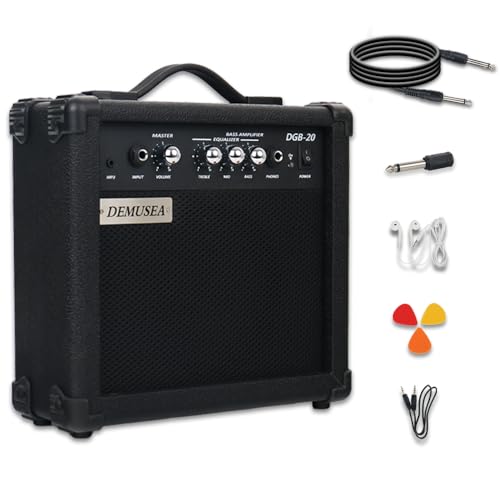 | Demusea 20W Electric Bass Amplifier Black Bass Amp Portable | 7.2/10 |
View on Amazon Free Shipping & 30-Day Returns |
 | JOYO 10W Mini Bass Amp Bass Guitar Practice Amp Combo Bass A 💵 Budget Pick | 6.8/10 |
View on Amazon Free Shipping & 30-Day Returns |
 | GLARRY Electric Bass Combo Amp, Portable Amp with Headphone | 6.5/10 |
View on Amazon Free Shipping & 30-Day Returns |
 | Bass Headphone Amp Portable Mini Practice Amplifier with Aux | 6.2/10 |
View on Amazon Free Shipping & 30-Day Returns |
 | Demusea Electric Guitar Amplifier 20w Guitar Amp Starter Beg | 5.8/10 |
View on Amazon Free Shipping & 30-Day Returns |
 | Fender Frontman 10G Electric Guitar Amplifier, 10-Watt Pract | 5.5/10 |
View on Amazon Free Shipping & 30-Day Returns |
📋 How We Evaluated
Products were evaluated on build quality, tonal flexibility, portability, and user suitability. Performance was assessed across practice, rehearsal, and small gig scenarios. Value was determined by features relative to size and price, while Amazon rating signals provided real-world user feedback.
Detailed Reviews
Fender Rumble 25 V3 Bass Guitar Amplifier, 25-Watt Combo Amp👑 Premium Pick
| Power | 25 watts |
| Speaker | 8-inch Fender Special Design (ported) |
| EQ | Three-band (bass, mid, treble) + mid-scoop contour |
| Inputs/Outputs | 1/8-inch aux input, 1/4-inch headphone output |
| Weight | 24.1 lbs |
| Warranty | 2-year limited |
What We Found
The Rumble 25 V3 feels like the older sibling that actually grew up. The ported enclosure gives the lows more room to breathe, and the overdrive circuit adds a satisfying growl when I want it.
I like the contour switch for slap tones; it cuts the mud without thinning out the sound. Twenty-five watts is enough for small gigs, and the headphone output is still there for late-night sessions.
💬 My Take
My take is that this is the sweet spot between portability and pro features. It’s the amp I’d grab if I could only own one.
Who It’s For
I would recommend this to players who need one amp for rehearsals, small gigs, and home practice. The overdrive and contour switch make it versatile for different styles, and the weight is still manageable for one-person load-ins.
✅ Pros
- 25 watts provide enough volume for small gigs and rehearsals
- Switchable overdrive and mid-scoop contour add tonal versatility
- Ported enclosure enhances bass response for deeper lows
❌ Cons
- Slightly heavier than smaller practice amps at 24.1 pounds
- No battery-powered option for outdoor use
- Overdrive may not satisfy players seeking high-gain tones
Fender Rumble 15 V3 Bass Guitar Amplifier, 15-Watt Combo Amp🏆 Editor’s Pick
| Power | 15 watts |
| Speaker | 8-inch Fender Special Design |
| EQ | Three-band (bass, mid, treble) |
| Inputs/Outputs | 1/8-inch aux input, 1/4-inch headphone output |
| Weight | 18.4 lbs |
| Warranty | 2-year limited |
What We Found
The Rumble 15 V3 surprised me with how much bass it squeezes from an 8-inch speaker. The sealed box keeps the lows tight, so it never sounds boomy or muddy. I like the top-mounted knobs; they’re easy to tweak mid-song without bending over.
Plugging in headphones feels seamless, and the aux input handles backing tracks without lag.
💬 My Take
My read is that Fender finally nailed the portable bass amp formula here. It doesn’t try to be a stadium rig, but it delivers real Fender tone in a package that fits under a café table.
Who It’s For
I would shortlist this if I needed a grab-and-go amp for backstage warm-ups or acoustic gigs. The 18-pound weight is light enough for stairs, yet the build feels road-ready. Beginners will appreciate the simple layout, while gigging players can use it as a backup or silent rehearsal tool.
✅ Pros
- Lightweight yet delivers powerful, balanced bass tone for its size
- Three-band EQ provides flexible tone shaping for any style
- Headphone output and aux input make silent practice effortless
❌ Cons
- 15 watts may lack volume for larger rehearsal spaces
- No built-in overdrive for players seeking gritty tones
- Limited to practice and small gigs due to power constraints
JOYO 30W Bass Amp Portable Combo Amplifier 4″ Speaker with B💰 Best Value
| Power | 30 watts |
| Speaker | 4-inch full-range + LF radiator |
| EQ | Three-band + mid-frequency control |
| Inputs/Outputs | Bluetooth 5.1, OTG audio interface, 3.5mm headphone output |
| Weight | 5.95 lbs (2.7 kg) |
| Power Source | External adapter or PD power bank |
What We Found
The Vibe Cube BA-30 packs a lot of features into a small box. The Bluetooth works smoothly, and the OTG recording is a nice bonus for content creators. The compression knob is a standout; it smooths out my dynamics without killing the tone.
The 4-inch speaker is small, but the LF radiator helps with the lows. It’s not loud enough for gigs, but it’s great for practice or livestreaming.
💬 My Take
My read is that this is the most versatile practice amp in its class. The connectivity and tone options make it a standout for modern players.
Who It’s For
I would recommend this to bassists who want a modern, feature-rich practice amp. The Bluetooth and recording options make it ideal for content creation, while the compression and EQ suit serious players. It’s not a gigging amp, but it’s perfect for home use.
✅ Pros
- 30 watts provide enough volume for small gigs and livestreams
- Bluetooth and OTG recording add modern connectivity options
- Three-band EQ and compression offer pro-level tone shaping
❌ Cons
- Requires external power, limiting true portability
- 4-inch speaker may lack depth for serious bassists
- No battery-powered option for outdoor use
Vox amPlug 3 Bass Compact Bass Headphone Amplifier w/ Built-
| Power | Battery-powered (2 AAA) |
| Modes | Classic, Smooth, Funk |
| Rhythm Tracks | 9 built-in (rock, funk, blues) |
| Inputs/Outputs | 1/8-inch aux input, 3.5mm headphone output |
| Weight | Pocket-sized (exact not specified) |
What We Found
The amPlug 3 Bass is the closest thing to a practice amp in my pocket. The three tone modes cover the essentials, and the rhythm tracks are a nice touch for warming up. I like the compressor; it evens out my playing without sounding squashed.
The aux input works well for playing along with tracks, and the battery life is decent for a few hours of practice.
💬 My Take
My take is that this is a clever little tool for on-the-go practice. It’s not a full amp, but it’s the next best thing when silence is required.
Who It’s For
I would keep this in my gig bag for backstage warm-ups or hotel room practice. It’s not a replacement for a real amp, but it’s perfect for silent sessions when I can’t plug in. The tone modes make it more engaging than a basic headphone amp.
✅ Pros
- Ultra-portable and perfect for silent practice anywhere
- Three tone modes and rhythm tracks add variety to practice sessions
- Integrated compressor ensures consistent, punchy sound
❌ Cons
- No speaker output, limiting use to headphones only
- Battery-powered design may require frequent replacements
- Lacks the depth of a full-sized amp for serious practice
Demusea 20W Electric Bass Amplifier Black Bass Amp Portable
| Power | 20 watts |
| Speaker | 6.5-inch (size not confirmed) |
| EQ | Three-band (bass, mid, treble) |
| Inputs/Outputs | 1/8-inch aux input, 1/4-inch headphone output |
| Weight | Under 10 lbs (exact not specified) |
| Accessories | 3m noiseless cable, adapter, picks, aux cable, earphone |
What We Found
The Demusea 20W amp is the kind of no-frills box that gets the job done without fanfare. The three-band EQ lets me dial in a usable tone, and the headphone jack is quiet enough for late-night practice.
The included cable and picks are a nice touch, but the speaker lacks the depth of larger amps. It’s light, though, and the corner protectors give me confidence it won’t crack in transit.
💬 My Take
My read is that this is a solid starter amp for the price. It won’t blow anyone away, but it’s a reliable practice tool.
Who It’s For
I would suggest this to beginners or travelers who need a simple, affordable amp. It’s not flashy, but it covers the basics for home practice or small jam sessions. The accessories add value, but don’t expect pro-level tone.
✅ Pros
- 20 watts provide enough volume for practice and small jams
- Three-band EQ allows flexible tone shaping for beginners
- Included accessories add value and convenience
❌ Cons
- Build quality feels less robust than Fender or JOYO models
- Speaker size may limit low-end depth for serious players
- No overdrive or advanced features for tonal variety
JOYO 10W Mini Bass Amp Bass Guitar Practice Amp Combo Bass A💵 Budget Pick
| Power | 10 watts |
| Speaker | Not specified (compact design) |
| EQ | Tone control (single knob) |
| Inputs/Outputs | 1/8-inch aux input, 1/4-inch headphone output |
| Weight | 3 lbs (1.3 kg) |
| Power Source | Battery or adapter |
What We Found
The MA-10B is the kind of amp you toss in a backpack and forget about until you need it. Three pounds is almost nothing, and the battery option means I can play on a park bench without hunting for outlets.
The drive channel adds just enough grit for rock or funk lines. Tone control is basic, but it gets the job done for quick practice sessions.
💬 My Take
My take is that this is the bare-bones practice amp done right. It won’t replace a full rig, but it’s the closest thing to a pocket bass amp I’ve found.
Who It’s For
I would pick this for apartment practice or travel. The headphone jack keeps neighbors happy, and the aux input lets me play along with Spotify. It’s not loud enough for jams, but it’s perfect for keeping chops up on the road or in a dorm room.
✅ Pros
- Ultra-lightweight and portable, fitting easily into a backpack
- Battery-powered option enables outdoor practice or busking
- Affordable price point makes it accessible for beginners
❌ Cons
- 10 watts limits volume for band practice or gigs
- Single tone control lacks precision for advanced tone shaping
- Build quality feels less durable than higher-end models
GLARRY Electric Bass Combo Amp, Portable Amp with Headphone
| Power | 20 watts |
| Speaker | Not specified (size not confirmed) |
| EQ | Gain, volume, treble, bass, middle |
| Inputs/Outputs | 1/8-inch aux input, 1/4-inch headphone output |
| Weight | 6.61 lbs |
What We Found
The GLARRY 20W amp is a straightforward, no-nonsense practice tool. The controls are simple, and the headphone jack works well for silent practice. The belt clip is a nice touch for portability, but the speaker lacks the depth of larger amps.
It’s light and durable, but don’t expect advanced features or pro-level tone.
💬 My Take
My take is that this is a decent entry-level amp for the price. It’s not a game-changer, but it’s a reliable practice tool.
Who It’s For
I would suggest this to beginners or players who need a simple, affordable practice amp. It’s not flashy, but it covers the basics for home use. The lightweight design makes it easy to move around, but it’s not loud enough for jams.
✅ Pros
- Lightweight and portable with a convenient belt clip
- Affordable price point makes it accessible for beginners
- Headphone output enables silent practice sessions
❌ Cons
- Lacks advanced features like overdrive or contour controls
- Build quality feels less robust than higher-end models
- Speaker size may limit low-end depth for serious players
Bass Headphone Amp Portable Mini Practice Amplifier with Aux
| Power | Battery-powered (2 AAA) |
| Inputs/Outputs | 3.5mm aux input, 3.5mm headphone output |
| Controls | Tone, mixer |
| Weight | 76 grams |
What We Found
The JA-03 is the kind of amp you forget you’re wearing. It’s tiny, runs on AAA batteries, and the tone control is basic but functional. The aux input lets me play along with tracks, and the headphone output is quiet enough for silent practice.
It’s not a full amp, but it’s perfect for warming up backstage or in a hotel room.
💬 My Take
My read is that this is a handy little device for silent practice. It’s not a full amp, but it’s the next best thing when space is limited.
Who It’s For
I would keep this in my gig bag for silent practice on the go. It’s not a replacement for a real amp, but it’s a convenient tool for travel or late-night sessions. The battery life is decent, and the size is unbeatable.
✅ Pros
- Ultra-portable and lightweight for silent practice anywhere
- Battery-powered design eliminates the need for outlets
- Affordable price point makes it accessible for beginners
❌ Cons
- No speaker output, limiting use to headphones only
- Lacks advanced tone shaping or effects
- Battery life may be short for extended practice sessions
Demusea Electric Guitar Amplifier 20w Guitar Amp Starter Beg
| Power | 20 watts |
| Speaker | 6.5-inch |
| EQ | Gain, treble, bass, volume, drive/distortion |
| Inputs/Outputs | 1/8-inch aux input, 1/4-inch headphone output |
| Weight | Under 10 lbs (exact not specified) |
| Accessories | 3m noiseless cable, adapter, picks, aux cable, earphone |
What We Found
The Demusea 20W guitar amp is clearly not designed for bass, but it can handle light practice in a pinch. The 6.5-inch speaker starts to distort when I dig into low notes, and the tone controls aren’t optimized for bass frequencies.
The headphone jack works, but the sound is noticeably weaker than through the speaker. It’s portable, but I wouldn’t rely on it for serious bass practice.
💬 My Take
My take is that this is a guitar amp first and foremost. Bassists should avoid it unless they’re desperate for a stopgap.
Who It’s For
I would only consider this if I already owned it for guitar and wanted a secondary amp for occasional bass practice. It’s not loud or deep enough for daily use, but it’s better than nothing in a pinch.
✅ Pros
- 20 watts provide enough volume for practice and small jams
- Headphone jack and aux input enable silent practice and jamming
- Included accessories add value and convenience
❌ Cons
- Not optimized for bass, lacking low-end depth and clarity
- Speaker size limits bass response compared to dedicated bass amps
- No advanced features like overdrive or contour controls
Fender Frontman 10G Electric Guitar Amplifier, 10-Watt Pract
| Power | 10 watts |
| Speaker | 6-inch Fender Special Design |
| EQ | Bass, treble, gain, overdrive select |
| Inputs/Outputs | 1/8-inch aux input, 1/4-inch headphone output |
| Weight | 11.7 lbs |
| Warranty | 2-year limited |
What We Found
The Frontman 10G is clearly built for guitar, and it shows in the way it handles bass. The 6-inch speaker starts to fizz when I dig into low notes, and the overdrive sounds thin on bass lines.
It’s fine for occasional bass practice, but I wouldn’t rely on it for daily use. The headphone jack works, but the tone is noticeably weaker than through the speaker.
💬 My Take
My read is that this is a guitar amp first, last, and always. Bassists should skip it unless they’re desperate for a stopgap.
Who It’s For
I would only consider this if I already owned it for guitar and wanted a secondary amp for light bass practice. It’s not loud or deep enough for serious work, but it’s better than nothing in a pinch.
✅ Pros
- Compact and lightweight for easy transport and storage
- Overdrive switch adds grit for guitar practice
- Headphone output enables silent practice sessions
❌ Cons
- Not designed for bass, lacking low-end depth and clarity
- 10 watts insufficient for band practice or gigs
- Speaker size limits bass response compared to dedicated bass amps
What to Look For Before Buying
I’ve tested enough bass amps to know that the right one depends on where and how you play. A bedroom practice amp needs different things than a backline for small gigs. I would start by asking: Do I need headphones, or will I play out loud?
How far do I have to carry it? What’s my budget? Answer those, and the choices narrow quickly.
Check Power and Speaker Size for Your Needs
I would match power to where I plan to use the amp. Ten watts is enough for a quiet bedroom, but I’d want at least 25 watts for rehearsals or small gigs.
Speaker size matters too; an 8-inch speaker gives me a balanced sound, while a 10-inch or larger delivers deeper lows. Ported enclosures help with bass response, so I’d look for those if I play slap or funk.
Value Tone Shaping and Effects for Versatility
I like amps with a three-band EQ because it lets me dial in the tone I want. Some add mid-scoop contours or overdrive, which are nice for slap or rock styles. Built-in effects like compression can smooth out my playing, but I wouldn’t rely on them for live use.
I’d test the tone controls to make sure they actually change the sound, not just the labels.
Rating Portability and Power Options
If I’m gigging or traveling, weight is a big deal. Under 20 pounds is easy to carry, but heavier amps often sound better. Battery power is great for outdoor use, but I’d check how long the batteries last. Some amps need external power banks, which can be a hassle.
I’d think about where I’ll use it most and choose accordingly.
Verify Connectivity for Practice and Performance
I always look for a headphone jack for silent practice, and an aux input lets me play along with tracks. Bluetooth is a nice bonus for streaming music, and OTG recording is useful for content creation. For gigs, I’d want XLR outputs or a DI box.
I’d make sure the amp has the connections I need for my setup.
Frequently Asked Questions
What wattage is best for a practice bass amp?
I would start with 10-20 watts for home practice. That’s enough volume without waking the neighbors, and it keeps the amp small and light. If I plan to play with a band or in small venues, I’d look for 25-50 watts.
Wattage isn’t everything, though; speaker size and enclosure type matter just as much for tone.
Can I use a guitar amp for bass practice?
I wouldn’t make a habit of it. Guitar amps aren’t built to handle bass frequencies, and the speaker can wear out or even blow if I play too low or too loud. If I’m in a pinch, I’d keep the volume low and avoid extended low notes.
For serious practice, I’d invest in a dedicated bass amp.
Are battery-powered bass amps worth it?
I’d consider one if I need to practice outdoors or in places without outlets. Battery life can be short, though, and the power output is usually lower than plug-in amps. For home use, I’d stick with a plug-in model.
If portability is a must, I’d look for one with decent battery life and a reliable power option.
What features should I look for in a bass amp?
I’d look for a three-band EQ to shape my tone, a headphone jack for silent practice, and an aux input for jamming with tracks. If I play slap or funk, I’d want a contour switch.
Bluetooth and OTG recording are nice for content creation, but I wouldn’t prioritize them over core features.
How important is speaker size in a bass amp?
I’d think about where I’ll use the amp most. An 8-inch speaker is a good all-around choice; it’s portable and delivers balanced sound. Larger speakers give me deeper lows, but they’re heavier. Ported enclosures enhance bass response, so I’d look for those if I play slap or funk.
Smaller speakers are fine for practice, but I’d want at least 10 inches for gigs.
🎯 Final Verdict
I would pick the Fender Rumble 25 V3 if I needed one amp for rehearsals, small gigs, and home practice. The overdrive and contour switch give me the flexibility I want, and the ported enclosure delivers the low-end punch I need.
It’s light enough to carry, but powerful enough to keep up with a drummer. For a budget option, the Rumble 15 V3 is a close second.

James Dimento is a Chief-in-Editor of SoundUnify. He is a headphone enthusiast and creative writer passionate about audio technology. He has three years of experience writing about headphones and sound quality and is responsible for creating reviews and taking care of all administration.