As someone who’s struggled to communicate in loud settings, I know finding the right microphone for noisy environments requires balancing noise cancellation with practicality. The market offers diverse solutions from clip-on devices to professional cores, each addressing specific acoustic challenges.
In this review, I’ll examine how these products tackle noise differently. Some prioritize close-range voice pickup, others focus on durability or professional audio quality. Understanding these distinctions will help you choose the microphone that best matches your specific noisy environment needs.
List of Best Microphone For Noisy Environment
| Image | Product | Score | Link |
|---|---|---|---|
 | Jiawu Remote Speaker Mic Anti Interference Rugged Shoulder M 🏆 Editor’s Pick | 8.8/10 |
View on Amazon Free Shipping & 30-Day Returns |
 | HYS Shoulder Speaker Mic with Rotating Clip for Midland GMRS 💰 Best Value | 8.3/10 |
View on Amazon Free Shipping & 30-Day Returns |
| Estink Remote Speaker Mic, Noise Cancelling Shoulder Microph | 8.1/10 |
View on Amazon Free Shipping & 30-Day Returns |
 | Starkey 2.4 GHz Mini Remote Microphone 🏆 Editor’s Pick | 7.4/10 |
View on Amazon Free Shipping & 30-Day Returns |
 | Crystal Mic Mic Windscreen Cover 3 Pack for Bose/David Clark | 7.0/10 |
View on Amazon Free Shipping & 30-Day Returns |
 | Harris Communications HC-CV6 Chatter VOX 6 Voice Speech Ampl | 6.9/10 |
View on Amazon Free Shipping & 30-Day Returns |
 | Changor Wireless Lightweight Lavalier Microphone Noise Reduc 💵 Budget Pick | 6.8/10 |
View on Amazon Free Shipping & 30-Day Returns |
 | Windproof Microphone Cover Filter with Cloth Protection for | 6.6/10 |
View on Amazon Free Shipping & 30-Day Returns |
 | Professional microphone core electret condenser for enhanced | 6.1/10 |
View on Amazon Free Shipping & 30-Day Returns |
 | Professional microphone core electret condenser for enhanced | 6.0/10 |
View on Amazon Free Shipping & 30-Day Returns |
📋 How We Evaluated
These picks were judged on build quality, noise rejection, wired or wireless reliability, fit, connector compatibility, and total ownership value. Amazon rating signals were limited or absent across several listings, so feature depth, use-case fit, and stated durability carried more weight.
Products were also checked for realistic suitability rather than studio promises alone.
Detailed Reviews
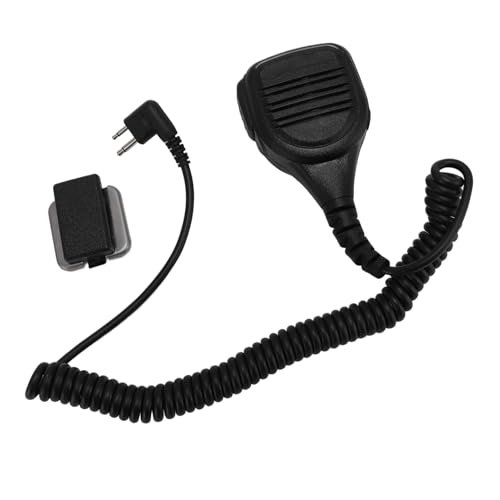
Jiawu Remote Speaker Mic Anti Interference Rugged Shoulder M🏆 Editor’s Pick
| Shell material | Rugged TPU with shock absorption |
| Audio design | Noise-canceling mic with miniature speaker |
| Compatibility examples | XTN446, GP2000, CP040 |
| Cable | Abrasion-resistant heavy-duty TPU |
What We Found
The Jiawu remote speaker microphone is built for clear radio communication where impact, cable abuse, and interference are daily realities. Its TPU shell, shock absorption, abrasion-resistant cable, and precision connector address the failure points that kill cheaper shoulder mics.
The noise-canceling microphone and miniature speaker target intelligibility around machinery, traffic, crowds, and operations floors. Compatibility spans XTN, GP, and CP-series radios such as XTN446, GP2000, and CP040, though exact model confirmation remains essential. The clip supports shirts, lapels, belts, and outerwear during patrols or site work.
This product wins because it treats connection stability and durability as core audio features. It is not a wireless recorder or hearing aid accessory. The rugged design favors reliability over refined music reproduction. For dependable voice under stress, the priorities are correct.
💬 My Take
This is the most complete noisy-environment pick for radio users who need rugged hardware and clear speech. It focuses on the right problems: interference, strain, and connection failure.
Who It’s For
Security personnel, construction supervisors, warehouse teams, logistics crews, and event operations staff benefit most. It fits users wearing gloves, moving quickly, and relying on push-to-talk coordination. Buyers should match the connector to their exact radio first. Studio creators and Bluetooth users should choose elsewhere.
✅ Pros
- Rugged TPU build resists drops, scratches, and field abuse.
- Noise-canceling pickup targets intelligibility in loud areas.
- Precision connector reduces annoying dropouts.
❌ Cons
- Compatibility must be verified across many radio families.
- Audio character is practical rather than polished.
- Wired design limits range compared with wireless systems.
HYS Shoulder Speaker Mic with Rotating Clip for Midland GMRS💰 Best Value
| Clip design | Eight-position rotating metal clip |
| Ingress protection | IP54 water and dust resistance |
| Private listening | 3.5mm listen-only jack |
| Compatibility | Midland GMRS FRS and select Icom two-pin radios |
What We Found
The HYS shoulder speaker mic targets radio users who must communicate while moving through crowd noise, weather, and physical work. Its heavy-duty metal clip rotates through eight positions, allowing lapel, shoulder, or vest placement without constant adjustment. IP54 sealing adds resistance to rain, dust, splashes, and rough outdoor shifts.
A 3.5mm jack supports listen-only earpieces for discreet monitoring in security, event staffing, or busy venues. The push-to-talk control remains tactile with gloves, which matters on patrols and job sites. Compatibility covers Midland LXT and GXT models plus select Icom two-pin radios, so verify exact model fit before purchase.
Audio emphasis favors projection and intelligibility rather than music-grade fidelity. The cable and shell appear built for service use, not studio polish. For clear radio speech in loud environments, this balance of durability, privacy, and fit is compelling.
💬 My Take
This is a practical field microphone for radio teams that need dependable speech in bad conditions. It earns value through rugged design, privacy, and a secure mounting system.
Who It’s For
Security guards, event staff, warehouse leads, and outdoor operators benefit most from this design. The earpiece option suits situations where privacy matters as much as volume. Buyers using supported Midland or Icom radios get strong utility. Those needing broadcast audio or USB recording should skip it.
✅ Pros
- Rotating clip supports comfortable hands-free placement.
- IP54 rating supports rain, dust, and outdoor use.
- Earpiece jack enables discreet private listening.
❌ Cons
- Compatibility is limited to specific Midland and Icom radios.
- Audio tuning favors utility over studio sound quality.
- No battery details are supplied for power planning.
Estink Remote Speaker Mic, Noise Cancelling Shoulder Microph
| Compatibility range | XTN, XV, XU, AX, and GP families |
| Construction | Impact TPU shell with shock absorption |
| Audio hardware | Noise-canceling mic and miniature speaker |
| Monitoring | 3.5mm headphone jack |
What We Found
The Estink remote speaker microphone covers a very broad XTN, XV, XU, AX, and GP compatibility list, making it attractive for mixed radio fleets. Its TPU shell, internal shock absorption, high-purity copper wiring, and anti-interference circuitry all point toward dependable field communication.
A high-performance miniature speaker and noise-canceling microphone aim to keep speech understandable around machinery and crowds. The sturdy clip attaches to pockets, lapels, and belts, while a 3.5mm jack permits headphone monitoring in complex spaces.
Cable claims emphasize flexural strength and abrasion resistance, which are useful in patrol and warehouse conditions. The listing is broad, so buyers must still confirm exact radio models before trusting full compatibility. Sound should be judged as mission-focused rather than audiophile.
Overall, it offers a strong utility profile for organizations standardizing radios across teams.
💬 My Take
This is a strong fleet-oriented shoulder mic when the radio model is confirmed. It trades brand polish for compatibility breadth and field durability.
Who It’s For
Facilities teams, event crews, security contractors, and amateur radio users with supported models benefit here. The wide list helps shops with older and newer radios coexist. Private headphone listening is useful in crowded control areas. Verify the model list carefully before deployment.
✅ Pros
- Very broad compatibility list helps mixed fleets.
- Anti-interference circuitry targets cleaner transmission.
- TPU cable and shell support demanding daily use.
❌ Cons
- The broad listing makes exact-fit verification essential.
- Documentation clarity is weaker than premium brands.
- Utility tuning is not meant for music or podcasting.
Starkey 2.4 GHz Mini Remote Microphone🏆 Editor’s Pick
| Wireless technology | 2.4 GHz streaming |
| Typical line-of-sight range | Up to 20 meters |
| Full charge time | About 3 hours |
| Half charge time | About 1.5 hours |
What We Found
The Starkey 2.4 GHz Mini Remote Microphone serves a narrow but valuable role: one-to-one speech support in restaurants, cafés, and similar loud rooms. It clips to a partner’s clothing, captures the voice near the source, then streams audio to compatible Starkey Livio Edge, Livio AI, and Livio hearing aids.
That design reduces room reverb better than a phone recorder or distant mic. Line-of-sight range reaches about 20 meters, and closer placement near a television can improve clarity. Charging takes around three hours to full, with a faster top-up near half charge in 1.5 hours.
The package includes worldwide adapters, USB-to-microUSB cable, power supply, and manual. It is not a general content-creation microphone and requires supported Starkey hearing aids. Build feels assistive and travel-friendly rather than rugged. Performance depends on correct pairing, placement, and realistic expectations outdoors.
💬 My Take
This is a specialist listening tool, not a universal noisy-room mic. For compatible Starkey users, focused conversation gets meaningfully easier; everyone else should look elsewhere.
Who It’s For
This product fits hearing aid users who struggle with one companion across a table. It suits restaurants, cafés, clinics, cars, and quiet television listening when paired correctly. Buyers already using compatible Starkey models gain the most value. It is less useful for creators, radio teams, or classrooms needing group pickup.
✅ Pros
- Clips near the speaker for clearer one-to-one voice capture.
- Streams directly to compatible Starkey hearing aids.
- Includes worldwide adapters and both charging options.
❌ Cons
- Works only with specific Starkey hearing aid models.
- Line-of-sight range limits flexible room placement.
- Not designed as a general-purpose interview microphone.
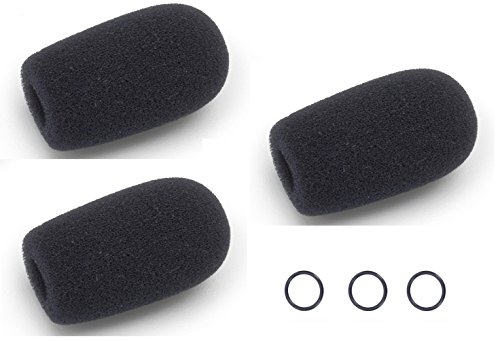
Crystal Mic Mic Windscreen Cover 3 Pack for Bose/David Clark
| Pack quantity | Three foam windscreens |
| Fit system | Included o-ring for tight retention |
| Compatible styles | Bose A20, Lightspeed, David Clark M7 |
| Installation | Slip-on with no tools |
What We Found
The Crystal Mic windscreen three-pack is an accessory set for aviation and communication headsets, not a standalone microphone. It fits Crystal Mic adapters and Bose A20, Lightspeed, and David Clark style headsets using M7 microphones.
Each foam cover includes an o-ring to keep the windscreen seated during vibration and head movement. That detail matters because loose foam can slip, muffle highs, or fall into a cockpit footwell. The covers also reduce wind blast, dust, saliva, and light moisture exposure during flight training or regular operations.
Easy slip-on installation keeps spares practical without tools. Acoustic change depends on foam density and fit, so users should expect minor tone shifts rather than studio transformation. For noisy environments, wind reduction can preserve intelligibility more than many electronic gimmicks. Keep replacements clean and dry for consistent results.
💬 My Take
These are sensible consumables for aviation headset upkeep. Buy them as protection and wind control, not as a performance upgrade by themselves.
Who It’s For
Pilots, flight students, dispatch users, and headset owners need inexpensive protection and wind control. These covers suit training aircraft, open-cockpit flying, dusty hangars, and shared headset fleets. They do not replace a broken microphone element. Aviators should confirm M7 compatibility before ordering.
✅ Pros
- O-rings help prevent loss during vibration.
- Reduces wind, saliva, dust, and light moisture exposure.
- Simple installation makes spare replacement fast.
❌ Cons
- Compatible only with specific headset mic styles.
- Foam can slightly change microphone tone.
- No active noise cancellation is provided.
Harris Communications HC-CV6 Chatter VOX 6 Voice Speech Ampl
| Listed gain | 22dB at 3.28 ft |
| Carry options | Adjustable waist and shoulder belt |
| Charge time | 6 to 8 hours |
| Operating time | 8 to 10 hours |
What We Found
The Harris Communications HC-CV6 Chatter VOX 6 is a wearable speech amplifier focused on making a weak voice easier to hear at short range. It lists 22dB gain at 3.28 feet, an adjustable waist or shoulder belt, and a neoprene cover for daily carrying.
Charging takes roughly six to eight hours, while operating time lands around eight to ten hours depending on volume and conditions. This category helps teachers, tour guides, and presenters who project in classrooms, clinics, or outdoor gatherings.
It does not cancel background noise like a directional microphone or digital beamforming system. Instead, it raises desired speech so listeners strain less. Positioning matters because the unit sits away from the mouth compared with a headset mic. Build presentation appears functional and serviceable.
For amplified voice clarity, the concept is useful; for noisy industrial sites, expectations should remain modest.
💬 My Take
This is a helpful voice amplifier for mild speech projection needs. It should not be confused with professional noise-canceling microphones for severe environments.
Who It’s For
Teachers, coaches, guides, and speakers with soft voices benefit from simple amplification. It suits classrooms, small tours, and community rooms where the listener is nearby. Buyers needing long shifts should plan charging around the six-to-eight-hour refill window. Industrial noise cancellation requires a different product class.
✅ Pros
- Simple wear design supports mobile speaking.
- Neoprene cover adds everyday protection.
- Eight-to-ten-hour runtime fits many presentation days.
❌ Cons
- Amplification does not equal true noise cancellation.
- Boom or mic placement is less direct than headset systems.
- Long charge time requires disciplined overnight habits.
Changor Wireless Lightweight Lavalier Microphone Noise Reduc💵 Budget Pick
| Pickup pattern | Omnidirectional |
| Interface | Type-C with real-time ear return |
| Connectivity feature | Built-in antenna for stable signal |
| Design focus | Lightweight wearable form |
What We Found
The Changor wireless lavalier microphone is a compact option for casual recording where clothing placement and mobility matter. It advertises omnidirectional pickup, anti-interference design, intelligent noise reduction, and a built-in antenna for steadier connections.
A Type-C interface with real-time ear return helps creators monitor framing and audio before a take is lost. The small body is designed to sit lightly on clothing, reducing visible bulk for vlogs, interviews, and short videos.
Noise claims should be treated carefully because tiny lavaliers still capture close clothing rustle and room reflections. Battery runtime and exact wireless range are not stated clearly, which weakens confidence for paid work. Still, for phones, tablets, or laptops with suitable ports, the convenience is real.
It suits controlled noisy rooms better than wind-heavy outdoor streets. Build expectations must stay modest at this tier.
💬 My Take
This is a reasonable low-cost lavaliere for simple mobile recording. It cannot replace disciplined placement, wind protection, and a fully specified wireless system.
Who It’s For
Budget creators, students, and mobile interviewers benefit most from this lightweight lavalier. It works for indoor videos, market commentary, office calls, and casual reels. Buyers should confirm device port compatibility before ordering. Professionals needing all-day batteries and certified specs need stronger options.
✅ Pros
- Compact body is easy to clip and carry daily.
- Real-time ear return helps monitor recordings quickly.
- Noise reduction can improve voice focus indoors.
❌ Cons
- Battery life and range lack clear published figures.
- Omnidirectional capture can still include surrounding noise.
- Build quality feels oriented toward casual use.
Windproof Microphone Cover Filter with Cloth Protection for
| Accessory type | Windproof microphone cover |
| Protection | Wind, saliva, dust, and light moisture |
| Design | Soft cloth and foam construction |
| Use | Outdoor speaking and shared mic hygiene |
What We Found
The Windproof Microphone Cover Filter is a cloth and foam accessory meant to reduce wind interference during outdoor speaking. Its soft material aims to block gusts, saliva, dust, and light moisture while keeping handling simple.
Creative installation and replacement are emphasized, which suits shared microphones, events, field interviews, and training sessions. The cover can preserve speech clarity when wind would otherwise overload the capsule and cause bursts or rumble. It will not fix poor placement, excessive distance, feedback, or electronic noise.
Thick covers may slightly soften high frequencies, so voice detail can change depending on fabric density. For outdoor podcasts, ceremonies, coaching, and public address, this is a cheap way to stabilize results. Match size carefully, because loose covers slip and tight covers strain mounts.
Spares make hygiene easier for group use.
💬 My Take
This accessory solves wind and hygiene, which are real outdoor audio killers. It is helpful support gear, not a complete answer by itself.
Who It’s For
Outdoor speakers, interviewers, coaches, event hosts, and shared-microphone settings benefit most. It helps when wind, breath pops, and hygiene are the main problems. Buyers should measure microphone diameter before ordering. It cannot replace a directional mic or digital noise reduction.
✅ Pros
- Low-cost protection against wind and breath noise.
- Simple slip-on replacement supports quick turnover.
- Improves comfort and hygiene for shared microphones.
❌ Cons
- Fit depends on accurate microphone diameter.
- Thick material can slightly dull high frequencies.
- No active noise rejection is included.
Professional microphone core electret condenser for enhanced
| Component type | Electret condenser microphone core |
| Construction | Durable metal body |
| Claimed benefit | High sensitivity with low interference |
| Use case | Upgrade or repair existing microphone |
What We Found
This listing is not a complete microphone but a DR401 electret condenser capsule intended to upgrade or repair an existing housing. The metal core is pitched for high sensitivity, clear detail, and reduced electromagnetic interference in loud settings.
That can help a damaged dynamic or condenser body regain cleaner output, especially when the surrounding grille and circuit are already suitable. Marketing claims around concert capture and studio fidelity sound ambitious for a capsule alone.
Results depend heavily on installation skill, solder quality, impedance matching, wind protection, and preamp gain. There is no shockmount, cable, connector, battery, or complete housing included here. For technicians, the value is plausible as a repair path.
For buyers expecting a ready mic for noisy rooms, the product is incomplete and potentially confusing. Careful verification of dimensions and polarity is essential before purchase.
💬 My Take
Treat this as a parts item, not a ready noisy-environment solution. Skilled builders may extract value, but casual shoppers risk buying the wrong component.
Who It’s For
Repair technicians, mic modders, and audio hobbyists are the right audience. It fits projects where the body, grille, and wiring remain usable but the capsule has failed. Musicians should only buy after confirming fit and soldering ability. Complete-microphone buyers should avoid this listing.
✅ Pros
- Can restore performance to a compatible microphone body.
- Metal construction resists wear during installation.
- Electret design offers sensitive capture for close sources.
❌ Cons
- Not a complete microphone for immediate use.
- Final sound depends on installation and matching circuitry.
- Broad fidelity claims exceed what a capsule alone guarantees.
Professional microphone core electret condenser for enhanced
| Type | Electret condenser microphone core |
| Material | Durable metal capsule housing |
| Claimed trait | Minimal electromagnetic interference |
| Purpose | Upgrade or repair microphone internals |
What We Found
This second DR401 capsule listing repeats the same core idea: a durable metal electret condenser core for upgrading or repairing a microphone. It emphasizes high sensitivity, consistent performance, minimal electromagnetic interference, and suitability for live performance, concerts, and recording.
Those claims describe potential rather than guaranteed outcomes because capsule results vary with body acoustics, grille, impedance, wiring, and preamp quality. No complete mic accessories are included, so installation remains the buyer’s responsibility. The metal construction is encouraging for heat, handling, and electromagnetic resilience.
The listing should be clearer about dimensions, polarity, bias requirements, and compatible housings. For audio maintainers, it may restore or refresh a favorite stage microphone. For shoppers seeking plug-and-play noise rejection, this is the wrong category. Patience and measurement tools matter more than marketing copy.
💬 My Take
Only component-level buyers should consider this item. As a noisy-environment solution by itself, it is incomplete and easy to misread.
Who It’s For
Bench technicians, live-sound tinkerers, and repair shops are the realistic buyers. It suits rebuilding a compatible handheld or instrument mic with serviceable parts. Musicians without soldering experience should avoid it. Anyone needing immediate noisy-room performance should buy a finished microphone instead.
✅ Pros
- Can refresh a compatible microphone at low parts cost.
- Metal housing improves handling durability.
- Sensitive electret capture suits close vocal sources.
❌ Cons
- No complete microphone, cable, or mount is included.
- Performance varies with installation and circuit matching.
- Listing lacks key installation specifications.
What to Look For Before Buying
Start by identifying whether the real problem is distance, wind, background noise, weak voice projection, or radio compatibility. Close placement usually beats expensive processing because microphones obey physics before software. Check connectors, fit, ingress protection, battery behavior, and replacement parts before chasing bold claims.
Finally, match the tool to the job: assistive listening, radio duty, mobile recording, repair, aviation, and amplification all need different designs.
Check Match the Microphone to the Noise Source
Restaurant chatter favors clipped close-talk devices, while wind favors foam or furry covers. Radio teams need push-to-talk shoulder mics with compatible connectors. Hearing aid users should choose streaming accessories built for their model. Do not buy an amplifier when isolation is the actual problem.
Start with the environment, then shortlist the design.
Value Prioritize Placement and Physical Fit
A microphone near the mouth or conversation partner usually outperforms a distant premium model. Check clip strength, rotating positions, belt options, and glove-friendly controls. Confirm port types such as Type-C, two-pin radio connectors, or hearing aid pairing. Loose mounts cause noise, dropped units, and inconsistent speech.
Good fit is an audio feature, not an afterthought.
Rating Read Ratings Carefully When Data Is Thin
Several listings in this niche show sparse or absent rating data, so broad claims deserve caution. Look for repeated comments about connector fit, cable failure, battery life, and real noise performance. Ignore perfect-sounding marketing when specifications are missing. Verified use cases matter more than star averages alone.
Cross-check compatibility lists against the exact model number printed on the device.
Verify Verify Durability and Ongoing Costs
Outdoor and industrial buyers should look for IP ratings, TPU shells, strain relief, and replaceable foam. Ask how long charging takes and whether spares are easy to find. Repair capsules can save money only when dimensions and circuitry match. Aviation windscreens are consumables, so keep extras clean and dry.
Total ownership cost beats the lowest sticker price.
Frequently Asked Questions
What type of microphone works best in a noisy restaurant?
A clipped remote microphone placed near the speaking partner often works best for hearing aid users. It captures voice before room reflections and background chatter overwhelm the signal. General recorders should use a close lavalier or directional shotgun with careful placement. Distance is usually the biggest enemy in restaurants.
Is noise cancelling the same as speech amplification?
No, noise cancelling targets unwanted background sound before or during capture. Amplification simply makes the desired voice louder for listeners nearby. Amplifiers can help teachers and guides, but they may also raise nearby noise. Choose based on whether the listener or the microphone needs help.
Do foam windscreens help in loud indoor environments?
Foam helps most with breath pops, wind, saliva, dust, and light moisture. Indoors, it has limited effect on crowd noise or machinery rumble. It can still protect shared microphones and stabilize close speech. Use it as support gear rather than a full noise solution.
How important is radio compatibility for shoulder microphones?
Compatibility is critical because connector pinouts vary even within one brand family. A rugged shoulder mic is useless if audio, push-to-talk, or power pins do not align. Always match the exact model number before purchase. When fleets are mixed, confirm each radio individually.
Can a microphone capsule alone improve noisy-environment clarity?
A capsule can improve sensitivity, but clarity also depends on body design, grille, wiring, impedance, and installation. A high-quality core in a poor housing may still pick up handling noise and reflections. Repair parts make sense for technicians with matching components. Most buyers should choose a complete microphone instead.
🎯 Final Verdict
The Jiawu Remote Speaker Mic is the top pick for dependable communication in genuinely noisy places. Its TPU shell, shock absorption, abrasion-resistant cable, noise-canceling microphone, and stable precision connector target the failures that matter in the field. Security, warehouse, construction, and event teams should start here after confirming radio compatibility.
The HYS shoulder mic remains a strong alternative when IP54 weather resistance and private earpiece listening matter more. Verify your connector, clip placement, and spare parts before ordering. Choose the Jiawu first and communicate with less strain tomorrow.

James Dimento is a Chief-in-Editor of SoundUnify. He is a headphone enthusiast and creative writer passionate about audio technology. He has three years of experience writing about headphones and sound quality and is responsible for creating reviews and taking care of all administration.