Finding a desktop microphone that sounds professional for remote podcast guests shouldn’t require a studio setup. The eight models here tackle the core tension between plug-and-play simplicity and studio-grade audio quality, all while staying budget-friendly.
I organized these by their standout strengths: USB vs. XLR flexibility, noise rejection, gain control precision, and RGB flair. Read each entry’s feature breakdown to match your priority, whether that’s mute-button clarity, zero-latency monitoring, or compatibility with gaming consoles and streaming software.
List of Best Desktop Microphone For Podcast Guests
| Image | Product | Score | Link |
|---|---|---|---|
 | FIFINE K688S XLR/USB Podcast Dynamic Microphone with Desktop 🏆 Editor’s Pick | 8.9/10 |
View on Amazon Free Shipping & 30-Day Returns |
 | FIFINE AmpliGame AM8 USB/XLR Dynamic Microphone for Gaming S 🥈 Runner-Up | 8.6/10 |
View on Amazon Free Shipping & 30-Day Returns |
 | ZealSound Podcast Microphone for PC, Noise Cancellation USB | 8.2/10 |
View on Amazon Free Shipping & 30-Day Returns |
 | MAONO A04 USB Microphone, 192kHz/24Bit Condenser Mic Kit for | 7.6/10 |
View on Amazon Free Shipping & 30-Day Returns |
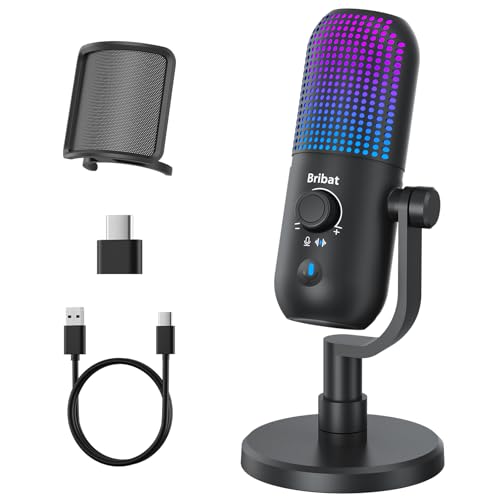 | BRIBAT USB Microphone for PC Gaming,Streaming&Podcast,Plug & | 7.4/10 |
View on Amazon Free Shipping & 30-Day Returns |
 | TONOR Podcast Microphone, USB Computer Mic, Cardioid Condens 💵 Budget Pick | 7.3/10 |
View on Amazon Free Shipping & 30-Day Returns |
 | CMTECK USB Computer Microphone G009, Noise-Cancelling Record 🥈 Runner-Up | 6.9/10 |
View on Amazon Free Shipping & 30-Day Returns |
 | CMOCIIY Plug & Play USB Computer Microphone, Flexible Goosen | 6.7/10 |
View on Amazon Free Shipping & 30-Day Returns |
📋 How We Evaluated
Evaluation considers listed build features, connection options, controls, accessories, and stated performance specifications. Product descriptions provide the available Amazon rating signals, but no ratings or prices were supplied. Suitability reflects guest comfort, room conditions, setup complexity, and likely value for different recording workflows.
Detailed Reviews
FIFINE K688S XLR/USB Podcast Dynamic Microphone with Desktop🏆 Editor’s Pick
| Microphone Type | Dynamic |
| Connections | USB and XLR |
| Signal-to-Noise Ratio | 80dB |
| Maximum SPL | 120dB |
What We Found
The FIFINE K688S is a dynamic microphone designed for USB convenience and later XLR expansion. Its listed 80dB signal-to-noise ratio and 120dB maximum SPL provide useful reference points, though they do not replace listening tests. Cardioid pickup and a multi-layer noise-reduction design target focused speech.
USB provides tap-to-mute, gain adjustment, and real-time headphone monitoring. An adjustable desktop stand, built-in shock mount, and windscreen are included. The listing says USB connects without drivers to computers or phones, while XLR requires an interface or mixer. That makes the package flexible for guests and hosts.
Price and rating data were not supplied, so comparative value remains uncertain.
💬 My Take
The strongest all-around fit in this group, thanks to its useful controls, included stand, and clear upgrade path.
Who It’s For
This microphone suits podcast guests who want a simple USB connection today and an XLR option for a later studio upgrade. The included adjustable stand can support a desktop interview without requiring a separate arm.
Headphone monitoring helps guests hear their input, while the mute button and gain control make basic adjustments accessible. The dynamic design and cardioid pattern may suit rooms where sound control is limited, although placement and room acoustics still matter. Compare desk space and speaking distance before choosing it.
Its value depends on the live price, which was not provided.
✅ Pros
- USB and XLR connections let the microphone adapt to basic and interface-based recording setups.
- The included adjustable stand, shock mount, and windscreen support a ready-to-use desktop configuration.
- USB mute, gain adjustment, and headphone monitoring offer practical interview controls.
❌ Cons
- XLR use requires a separate audio interface or mixer.
- The listing provides no price or Amazon rating data for judging value signals.
- A desktop stand may offer less flexible positioning than a boom arm.
FIFINE AmpliGame AM8 USB/XLR Dynamic Microphone for Gaming S🥈 Runner-Up
| Microphone Type | Dynamic |
| Frequency Response | 50Hz-16kHz |
| Connections | USB and XLR |
| Recommended Distance | 2-6 inches |
What We Found
The FIFINE AM8 is a dynamic microphone with both USB and XLR connections, giving hosts room to change recording setups. Its stated 50Hz-16kHz frequency response targets speech and vocals. The cardioid pattern is designed to favor sound from the front, which can help in untreated rooms.
USB adds tap-to-mute, a mute indicator, gain control, headphone monitoring, and RGB lighting. These controls are unavailable over XLR, so buyers should consider which connection they will use. The recommended speaking distance is two to six inches, requiring close placement.
An XLR cable is not included, and no price or rating data was provided. That limits direct value comparisons.
💬 My Take
A capable, flexible guest microphone when close placement works. The missing XLR cable and connection-dependent controls deserve attention before purchase.
Who It’s For
This model suits a guest who records at a fixed desk and can speak close to the microphone. USB makes initial setup straightforward, while XLR offers a future path to an interface or mixer. The mute indicator and headphone jack are useful during live interviews, where checking levels matters.
It may be less suitable for guests who prefer hands-free placement or sit farther away. RGB and gaming styling may appeal to streaming setups, but are not essential for audio work. Compare the required stand and cable costs before judging value.
✅ Pros
- USB and XLR connections support simple recording now and a mixer-based setup later.
- USB tap-to-mute includes an indicator, reducing uncertainty during live conversations.
- USB headphone monitoring and gain control provide convenient access to basic recording adjustments.
❌ Cons
- The XLR cable must be purchased separately.
- RGB lighting and function controls do not work through XLR.
- Close speaking distance may complicate placement for guests who move while talking.
ZealSound Podcast Microphone for PC, Noise Cancellation USB
| Pickup Pattern | Cardioid |
| Frequency Response | 40Hz-18kHz |
| Sampling Rate | 46kHz |
| Sensitivity | −45dB ±3dB |
What We Found
The ZealSound K66 is a USB condenser microphone with a cardioid pattern and a stated 40Hz-18kHz response. Its listing specifies 46kHz sampling and sensitivity of −45dB ±3dB. A noise-reduction mode is activated by holding the mute button, while default mode is presented as more natural for quiet spaces.
A headphone jack supports zero-latency monitoring, with separate controls for microphone volume, headphone level, and echo. Included USB-C and Lightning adapters support listed mobile devices alongside computers and PlayStation consoles. These controls provide more adjustment than a basic mute-only mic.
However, the supplied information does not list a stand or quantify noise reduction. Price and rating data are unavailable.
💬 My Take
A feature-rich option for mobile and desktop creators. Choose it for its controls and adapters, not unverified noise-reduction claims.
Who It’s For
This microphone is suited to creators who switch between desktop and compatible mobile recording and want physical controls. The included adapters can reduce connection hassles for iPhone, iPad, and USB-C devices. Separate monitoring and microphone controls help a guest make adjustments without opening software.
Noise reduction may help in a busy room, but should be evaluated in the actual recording environment. Echo control may be unnecessary for natural podcast speech, so check whether it can remain off. Confirm the package contents and device compatibility before buying, since price and ratings were not supplied.
✅ Pros
- Included USB-C and Lightning adapters support a broad range of listed mobile devices.
- Separate microphone, monitoring, and echo controls provide hands-on adjustment.
- Zero-latency headphone monitoring can help users check their signal while recording.
❌ Cons
- Noise-reduction effectiveness is not quantified in the supplied description.
- Echo control may be unnecessary for clean spoken-word recordings.
- The provided details do not specify a stand or include price and rating data.
MAONO A04 USB Microphone, 192kHz/24Bit Condenser Mic Kit for
| Capsule | 16mm electret condenser |
| Sampling Specification | 192kHz/24-bit chipset |
| Connection | USB |
| Included Accessories | Shock mount, pop filter, foam windscreen, desk clamp |
What We Found
The MAONO A04 is a USB condenser kit built around a 16mm electret capsule and a stated 192kHz/24-bit chipset. Its listing describes a smooth frequency response but gives no numeric range. A shock mount, pop filter, and foam windscreen are included to support desktop speech recording.
The package also includes a desk clamp that fits surfaces under 2.1 inches thick. USB setup requires no driver or external sound card, and listed compatibility includes computers, PS4, PS5, and some phones. Xbox is excluded, and the microphone does not use Maono Link.
The stated two-to-six-inch working distance calls for close placement. Prices and ratings were not supplied.
💬 My Take
A well-equipped USB kit for controlled desk recording. Confirm the clamp fit and avoid treating its sampling specification as a performance guarantee.
Who It’s For
This kit suits guests recording voiceovers or interviews from a stable desk, especially when a clamp-mounted position is practical. The included shock mount and windscreen can help manage handling vibration and breath noise, though room treatment still matters.
The high-resolution chipset specification may appeal to buyers comparing recording formats, but it does not guarantee better-sounding results by itself. Check desk thickness and device compatibility before ordering. Guests who need a freestanding base or advanced software controls may prefer another configuration.
Assess value against included accessories, since prices and rating data are absent.
✅ Pros
- The shock mount, pop filter, and foam windscreen provide useful recording accessories.
- Driver-free USB setup avoids needing a separate sound card for basic use.
- The included clamp supports positioning above the desk when the surface fits.
❌ Cons
- The desk clamp only fits surfaces thinner than 2.1 inches.
- The microphone is not compatible with Xbox or Maono Link.
- A high sample-rate specification alone does not establish real-world sound quality.
BRIBAT USB Microphone for PC Gaming,Streaming&Podcast,Plug &
| Pickup Pattern | Cardioid |
| Connection | USB |
| Included Cable | 1.8-meter USB-C |
| Lighting | Seven colors and breathing mode |
What We Found
The BRIBAT is a USB desktop microphone with a cardioid pickup pattern, one-touch mute, gain control, and headphone monitoring. The listing also describes a noise-cancellation button, though it does not provide measurements or explain how much sound it removes.
Seven solid RGB colors and a breathing mode add visual customization, with an option to switch lighting off. The package includes a metal pop filter, a 1.8-meter USB-C cable, an OTG adapter, and a stand. Compatibility includes Windows, Mac, PS4, PS5, and Android through the adapter; Xbox is excluded.
The supplied details do not state frequency response, bit depth, or sample rate. No price or rating data is available.
💬 My Take
A useful accessory-rich starter kit, although the missing audio specifications make its recording performance harder to assess.
Who It’s For
This setup may suit a beginner guest who wants a ready-to-connect desktop kit and visible mute status. The pop filter, cable, and OTG adapter support computer or compatible mobile recording without sourcing every accessory separately. Gain and headphone controls provide hands-on adjustments during interviews.
Its listed noise-cancellation mode may be useful in a shared space, but buyers should not treat that claim as proof of studio isolation. Check phone compatibility and adapter requirements before relying on mobile use. Without price or review data, compare the full kit against similarly equipped options.
✅ Pros
- The included pop filter, USB-C cable, and OTG adapter make the package more complete.
- Dedicated gain control and headphone monitoring support adjustments during a session.
- Mute status is shown by an indicator, and the lighting can be switched off.
❌ Cons
- The listing provides no frequency response, sample rate, or bit-depth specifications.
- Noise-cancellation performance is not quantified in the supplied product details.
- Xbox is unsupported, and Android use depends on the included adapter.
TONOR Podcast Microphone, USB Computer Mic, Cardioid Condens💵 Budget Pick
| Model | TC-777 |
| Pickup Pattern | Cardioid |
| Connection | USB 2.0 |
| Included Items | Tripod, mini shock mount, pop filter, 1.9-meter cord |
What We Found
The TONOR TC-777 is a USB condenser microphone with a cardioid pickup pattern and a compact desktop tripod. Its package includes a mini shock mount and pop filter, while the microphone and filter angles are adjustable.
The listing describes one-click mute and volume control, along with a non-slip stand intended to stabilize the setup. Plug-and-play USB 2.0 supports Windows, Mac, PS4, and PS5, but not Xbox. Zoom, Skype, and Discord are named as compatible applications. The included power cord measures 1.9 meters.
The supplied information does not state frequency response, sample rate, or capsule size. Price and Amazon rating data were not provided, so budget positioning is not independently verified.
💬 My Take
A practical basic kit when its included stand and filters match the setup. The sparse specifications limit confident comparisons with more documented models.
Who It’s For
This model fits a guest who needs a straightforward desktop kit for calls or occasional podcast appearances. The tripod, pop filter, and shock mount reduce the need to source basic accessories separately. Adjustable angles can help guests find a usable position on smaller desks.
It may be less appealing for creators planning to move to XLR or needing detailed audio specifications. Check the stand’s placement and the cable reach against the guest’s setup. Since no price or ratings are available here, compare the live listing with other complete USB kits.
✅ Pros
- The package includes a tripod, shock mount, and pop filter for basic desktop recording.
- Adjustable microphone and filter angles help accommodate different desk positions.
- Listed compatibility covers Windows, Mac, PS4, PS5, and common communication apps.
❌ Cons
- Xbox is not supported.
- The supplied details omit sample rate, frequency response, and capsule specifications.
- The listing information provides no verified price or rating signal for value comparisons.
CMTECK USB Computer Microphone G009, Noise-Cancelling Record🥈 Runner-Up
| Microphone Type | Condenser |
| Pickup Pattern | Omnidirectional |
| Connection | USB |
| Positioning | Adjustable metal gooseneck |
What We Found
The CMTECK G009 is a compact USB condenser microphone with an omnidirectional pickup pattern and an adjustable metal gooseneck. Its listing describes a CCS2.0 noise-cancelling chip and a pop filter, but supplies no measured noise-reduction figures. A physical mute button and red-or-green status light make operation easy to read.
The small base preserves desk space, and setup requires no drivers or external power. Compatibility is listed for Windows, Mac, and PS4, with Linux, Android, and Raspberry Pi excluded. An omnidirectional pattern can capture sound from multiple directions, which is less isolating than a front-focused pattern in a noisy room.
No price or rating data is available.
💬 My Take
A convenient call microphone, but its omnidirectional pickup makes it a cautious choice for isolated podcast dialogue.
Who It’s For
This microphone is best for guests who prioritize compact placement and quick USB connection over directional isolation. The gooseneck makes it easier to position the capsule without moving the base, which can help at crowded desks. It can suit online calls, classrooms, and casual podcast sessions in quieter rooms.
Hosts recording near keyboard noise or other speakers should consider a directional alternative. Confirm the guest’s operating system before buying, especially for mobile or Linux-based setups. With prices and ratings unavailable, value depends on the current listing and required accessories.
✅ Pros
- The flexible gooseneck allows positioning without taking up much additional desk space.
- A dedicated mute button and colored status light make mute state visible.
- Driver-free USB setup and no external power simplify basic computer use.
❌ Cons
- Omnidirectional pickup may capture more room sound than a cardioid microphone.
- The listing excludes Linux, Android, and Raspberry Pi compatibility.
- The product description gives no quantitative noise-reduction or audio-response measurements.
CMOCIIY Plug & Play USB Computer Microphone, Flexible Goosen
| Pickup Pattern | Omnidirectional |
| Connection | USB |
| Recommended Distance | 6-12 inches |
| Positioning | Flexible metal gooseneck |
What We Found
The CMOCIIY is a compact USB microphone with an omnidirectional pickup pattern and a flexible metal gooseneck. Its listing recommends a six-to-twelve-inch speaking range and includes windproof caps. A touch-sensitive mute button uses a green light for active status and red for muted status.
The base combines ABS construction with a non-slip silicone pad, according to the product description. Plug-and-play compatibility is listed for Windows and Mac, with no drivers or sound card required. The microphone is described for gaming, calls, and recording, but the supplied details give no frequency response or sampling specification.
Its omnidirectional pattern may capture surrounding sounds. Prices and ratings were not supplied.
💬 My Take
A compact option for quiet calls, but the omnidirectional pattern is a notable compromise for podcast guests.
Who It’s For
This microphone may suit a guest who needs portable, uncomplicated audio for calls or quieter recording spaces. The flexible neck helps position the capsule without shifting the compact base, and the indicator makes mute status easy to check. Its small footprint can work in shared offices or temporary setups.
However, the omnidirectional pickup is less suited to rooms with nearby conversation or keyboard noise. Confirm Windows or Mac compatibility and the available USB connection before ordering. With no supplied price or rating data, consider it only after comparing alternatives with more complete audio specifications.
✅ Pros
- The flexible gooseneck supports precise positioning while the base stays in place.
- A touch mute control and two-color indicator show the microphone’s status.
- The compact design is easy to move between desks or meeting spaces.
❌ Cons
- Omnidirectional pickup can capture more surrounding sound than a cardioid pattern.
- The listing limits stated compatibility to Windows and Mac.
- No frequency response or sampling details are supplied for audio comparison.
What to Look For Before Buying
A guest microphone must work with the guest’s device and recording space, not just look capable on a product page. Start by deciding whether simple USB or an expandable XLR setup fits the workflow. Then check pickup pattern, placement, and included accessories.
Treat technical claims and ratings as evidence to verify, not guarantees.
Check Match the Pickup Pattern to the Room
Cardioid microphones favor sound from the front and can help reduce nearby room noise. Omnidirectional models capture sound from multiple directions, which can suit group settings. For a solo guest in a shared room, prioritize directional pickup. Keep the capsule aimed toward the speaker.
Ask the guest to test keyboard noise and room echo before recording.
Value Choose USB Simplicity or XLR Expansion
USB microphones connect directly to many computers and simplify remote guest setup. XLR models need an interface or mixer, adding cost and setup steps. Dual-connection microphones can support both workflows, but check which features work over each connection. Confirm whether required cables are included.
Compare the complete setup cost, not just the microphone listing.
Rating Assess Controls and Audio Evidence
A clear mute indicator helps prevent accidental silence during live interviews. Headphone monitoring lets guests hear issues before recording ends. Gain controls can help set an appropriate input level, but they cannot fix poor placement. Compare stated response and sampling figures cautiously.
Amazon ratings can reveal recurring usability complaints, but no ratings were supplied for these products.
Verify Check Fit, Compatibility, and Accessories
Check the guest’s operating system, phone, and console against the compatibility list. Confirm stand type, cable length, and desk-clamp limits before ordering. Pop filters and shock mounts can reduce some plosives and vibration. They do not replace a quiet room or careful mic technique.
Review the current price and package contents because neither was provided here.
Frequently Asked Questions
Should podcast guests use a dynamic or condenser microphone?
Dynamic microphones can be a practical choice in rooms with everyday background noise. Condenser microphones may suit quieter, controlled spaces and offer different sensitivity characteristics. Neither type guarantees clean speech without good placement. Choose based on the room, connection, and guest’s recording habits.
Is a USB microphone enough for a remote podcast guest?
USB is often sufficient when the guest records directly to a compatible computer. It avoids the need for a separate audio interface. Confirm that the recording software recognizes the microphone and that headphones can monitor it. Run a short test before the interview.
Does a cardioid microphone eliminate background noise?
No. Cardioid pickup favors sound from the front, but it does not remove all surrounding noise. Distance, room reflections, and microphone direction still affect the recording. A quiet space and close, consistent placement remain important.
What should a podcast guest check before joining a recording?
The guest should confirm the microphone is selected as the input device and test speaking levels. Headphones can prevent speaker audio from bleeding into the mic. Check mute status, cable connections, and room noise. Record a short sample to catch problems before the session.
Do these product listings provide enough information to compare value?
Not fully. The supplied listings include features and compatibility details, but no prices or Amazon ratings. Some also omit key audio specifications. Check current listing information and package contents before making a purchase decision.
🎯 Final Verdict
The FIFINE K688S is the strongest overall choice here for podcast guests who need a straightforward USB setup with room to grow. Its dynamic, cardioid design pairs with USB mute, gain, and headphone monitoring, while XLR supports a future interface-based workflow.
The included stand, shock mount, and windscreen make the package practical for desktop recording. The FIFINE AM8 is a strong alternative with similar USB/XLR flexibility and RGB options. Compare current pricing and compatibility before choosing. Select the K688S for a capable guest setup, then test placement before recording.

James Dimento is a Chief-in-Editor of SoundUnify. He is a headphone enthusiast and creative writer passionate about audio technology. He has three years of experience writing about headphones and sound quality and is responsible for creating reviews and taking care of all administration.