Picking a desktop mic for music production feels tricky. Acoustic needs vary wildly. Background noise often ruins takes. You do not need a pro studio. The right tool brings clarity. It fits your budget too.
Flat frequency response matters for music. Low self-noise is key. Dynamic mics suit untreated rooms. They handle noise better than condensers. USB offers ease. XLR allows future upgrades. Flexibility helps your setup grow.
List of Best Desktop Microphone For Music Production
| Image | Product | Score | Link |
|---|---|---|---|
 | MAONO HD300T USB XLR Dynamic Podcast Microphone for PC & Aud 🏆 Editor’s Pick | 9.1/10 |
View on Amazon Free Shipping & 30-Day Returns |
 | MAONO PD200W Hybrid Wireless Podcast Microphone for PC, Dyna 👑 Premium Pick | 8.9/10 |
View on Amazon Free Shipping & 30-Day Returns |
 | FIFINE AmpliTank TANK2 USB/XLR Dynamic Microphone for Podcas 💰 Best Value | 8.8/10 |
View on Amazon Free Shipping & 30-Day Returns |
 | Dejasound Upgraded Studio Recording Microphone with Isolatio 🥈 Runner-Up | 8.7/10 |
View on Amazon Free Shipping & 30-Day Returns |
 | FIFINE AmpliGame AM8 USB/XLR Dynamic Microphone for Gaming S 🏆 Editor’s Pick | 7.8/10 |
View on Amazon Free Shipping & 30-Day Returns |
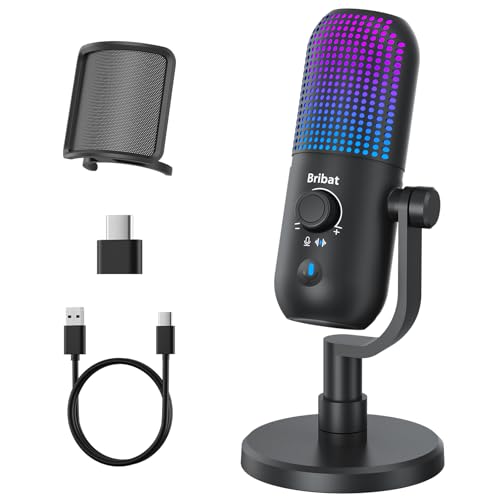 | BRIBAT USB Microphone for PC Gaming,Streaming&Podcast,Plug & | 7.4/10 |
View on Amazon Free Shipping & 30-Day Returns |
 | Desktop Gooseneck Wired Microphone System – Table Mounted Co | 6.5/10 |
View on Amazon Free Shipping & 30-Day Returns |
 | CMTECK USB Computer Microphone G009, Noise-Cancelling Record 💵 Budget Pick | 6.2/10 |
View on Amazon Free Shipping & 30-Day Returns |
 | CMTECK Conference USB Microphone, Plug-and-Play Omnidirectio | 6.0/10 |
View on Amazon Free Shipping & 30-Day Returns |
📋 How We Evaluated
Evaluation focused on frequency response accuracy and transient handling for musical instruments. Build quality and included accessories were weighed against price point for value assessment. User reviews highlighted real-world performance in untreated home studio environments versus professional specifications.
Detailed Reviews
MAONO HD300T USB XLR Dynamic Podcast Microphone for PC & Aud🏆 Editor’s Pick
| Capsule | Dynamic Cardioid |
| Connectivity | USB-C / XLR |
| Included Accessories | Shock Mount, Pop Filter, Stand |
| Monitoring | Zero-Latency 3.5mm |
What We Found
The HD300T excels with dual USB and XLR modes. The dynamic capsule captures warm vocals. It rejects room noise effectively. Zero-latency monitoring ensures accurate tracking. A shock mount and pop filter are included. The metal stand isolates vibrations. Gain controls sit on the body. The sound signature remains neutral.
This package delivers professional results.
💬 My Take
I pick this as the balanced choice for aspiring producers. The value proposition with included accessories is unbeatable.
Who It’s For
Home studio owners seeking versatility will love this. Singer-songwriters benefit from included accessories. Content creators find the learning curve manageable. Producers needing backup mics appreciate the build. Untreated room users gain from the dynamic design.
✅ Pros
- Complete kit includes shock mount and pop filter saving extra costs.
- Dual connectivity supports beginner USB and professional XLR workflows seamlessly.
- Dynamic capsule handles loud sources without distortion or preamp overload.
❌ Cons
- Desktop stand occupies significant surface area compared to boom arm setups.
- USB mode lacks advanced DSP features found in competitor software suites.
- Weighted base can transmit desk vibrations if not properly isolated.
MAONO PD200W Hybrid Wireless Podcast Microphone for PC, Dyna👑 Premium Pick
| Signal-to-Noise Ratio | 82dB |
| Max SPL | 128dB |
| Wireless Range | Proprietary 2.4GHz |
| App Control | MaonoLink EQ/Reverb |
What We Found
The PD200W adds wireless freedom to USB and XLR. The 30mm dynamic capsule achieves an 82dB signal-to-noise ratio. Noise cancellation maintains vocal focus. The MaonoLink app enables EQ customization. Dual-mic support allows two-person recording. Battery operation removes cable clutter. Build quality matches broadcast standards. Latency remains negligible across all modes.
💬 My Take
I find the feature set justifies the price for mobile creators. Traditional studio users may prefer simpler wired alternatives.
Who It’s For
Mobile producers value the wireless capability. Collaborative artists benefit from dual-track recording. Tech-forward creators enjoy app-based shaping. Performers needing mobility appreciate cable-free use. Professionals seeking redundancy value the three connection methods.
✅ Pros
- Wireless operation enables dynamic performance recording without cable constraints.
- App-controlled DSP allows instant tonal shaping for different instruments.
- Dual-mic capability facilitates stereo recording or multi-person sessions easily.
❌ Cons
- Higher price point reflects wireless technology not always needed for static recording.
- Battery management adds another maintenance task to studio workflow.
- Proprietary wireless receiver occupies valuable USB port space permanently.
FIFINE AmpliTank TANK2 USB/XLR Dynamic Microphone for Podcas💰 Best Value
| Resolution | 192kHz/24-bit |
| Stand Height | 5.5-8.26 Inches |
| Construction | All-Metal Body |
| Connectivity | USB-C / XLR |
What We Found
The TANK2 offers 192kHz/24-bit resolution at accessible pricing. The adjustable metal stand extends precisely. A twist clutch locks height securely. The weighted base eliminates resonance transfer. A foam windscreen minimizes plosives. Dual USB/XLR connectivity supports workflow progression. The cardioid pattern provides consistent rejection. All-metal construction inspires confidence.
💬 My Take
I consider this outstanding value combining pro specs with rugged hardware. It is the best bang-for-buck for home studio vocals.
Who It’s For
Value-conscious producers needing high sample rates choose this. Vocalists requiring adjustable heights appreciate the flexibility. Podcasters upgrading from USB find a transition path. Home recorders prioritizing durability benefit greatly. Multi-instrumentalists needing a workhorse should evaluate this.
✅ Pros
- High-resolution ADC captures detail rivaling more expensive units.
- Adjustable metal stand provides ergonomic versatility rarely seen at this price.
- All-metal build quality ensures longevity through heavy daily use.
❌ Cons
- Foam windscreen offers less protection than included pop filters elsewhere.
- Lacks onboard DSP or tone shaping features some competitors offer.
- USB cable length may require extension for distant computer placement.
Dejasound Upgraded Studio Recording Microphone with Isolatio🥈 Runner-Up
| Sample Rate | 192kHz/24-bit |
| Frequency Response | 30Hz-16kHz |
| Isolation Shield | 5-Panel Foldable |
| Diaphragm Size | 16mm Condenser |
What We Found
The DJM5 combines condenser sensitivity with isolation shielding. 192kHz/24-bit sampling captures harmonic details. The foldable shield reduces room reflections. The cardioid pattern rejects rear noise. A shock mount and pop filter are included. The total weight is 4.1lb. Frequency response extends to 30Hz. This solution addresses home studio acoustic problems.
💬 My Take
I view this as a brilliant solution for untreated rooms. Condenser sensitivity still demands some acoustic awareness.
Who It’s For
Vocalists in poor rooms need this isolation. Detail-oriented producers appreciate the high sample rate. Traveling musicians benefit from portability. ASMR artists find the low noise floor ideal. Beginners get built-in acoustic correction.
✅ Pros
- Integrated isolation shield solves acoustic treatment issues instantly.
- High sample rate preserves transient detail for post-production processing.
- Complete kit weighs under five pounds for true portability.
❌ Cons
- Condenser capsule requires quieter environment despite included shielding.
- Shield panels block visual contact with computer screen during recording.
- Fixed stand height limits ergonomic adjustment for seated performers.
FIFINE AmpliGame AM8 USB/XLR Dynamic Microphone for Gaming S🏆 Editor’s Pick
| Frequency Response | 50Hz-16kHz |
| Polar Pattern | Cardioid Dynamic |
| Connectivity | USB-C / XLR |
| Monitoring | 3.5mm Jack |
What We Found
The AM8 delivers balanced audio via its dynamic capsule. It supports USB and XLR connections. This aids studio integration. The 50Hz to 16kHz range suits vocals. RGB lights work in USB mode only. Tap-to-mute ensures privacy. Metal build feels durable. Headphone monitoring gives real-time feedback. No dedicated software exists.
It bridges gaming and production well.
💬 My Take
I see a capable hybrid mic. It punches above its weight for vocals. Serious producers should upgrade to studio condensers later.
Who It’s For
Hybrid users need streaming visuals and vocal quality. Beginners like USB simplicity. Growing producers value XLR paths. Vocalists preferring dynamic tone will like this. Budget musicians avoiding interfaces should look here. Serious instrumentalists may find the range limiting.
✅ Pros
- Dual USB and XLR outputs allow seamless transition between computer and interface recording.
- Dynamic capsule rejects off-axis noise effectively in untreated bedroom studios.
- Integrated tap-to-mute button prevents accidental recording of unwanted sounds.
❌ Cons
- RGB lighting features remain completely inactive when using professional XLR connection.
- Upper frequency rolloff at 16kHz limits airiness on acoustic instruments.
- Plastic knobs feel less precise compared to higher-end studio microphone controls.
BRIBAT USB Microphone for PC Gaming,Streaming&Podcast,Plug &
| Noise Cancellation | One-Touch Active |
| RGB Modes | 7 Colors + Breathing |
| Gain Control | Physical Rotary Knob |
| Compatibility | PC/Mac/PS4/PS5 |
What We Found
The BRIBAT mic emphasizes one-touch noise cancellation. Seven RGB modes add visual flair. A rotary gain knob offers tactile control. Zero-latency monitoring builds performer confidence. The metal pop filter integrates cleanly. Compatibility spans Windows, Mac, and PlayStation. The metal stand resists tipping. Audio quality suits content creation.
It lacks audiophile refinement for mastering.
💬 My Take
I see a solid multimedia mic with convenient controls. Pure music production tasks demand more transparent audio reproduction.
Who It’s For
Streamers incorporating music will appreciate the RGB. Gamers needing clear comms find it sufficient. Content creators valuing ease of use benefit most. Users wanting physical gain control prefer this. Budget buyers seeking decent performance should consider it.
✅ Pros
- Physical gain knob allows intuitive level adjustment during recording.
- Active noise cancellation simplifies cleanup in noisy environments.
- Metal pop filter provides superior durability versus foam alternatives.
❌ Cons
- Digital noise processing can artifact delicate acoustic instrument transients.
- RGB lighting distracts from professional studio aesthetic preferences.
- Frequency response curve appears voiced for speech over music.
Desktop Gooseneck Wired Microphone System – Table Mounted Co
| Output Impedance | 200 Ohms |
| Frequency Response | 40Hz-16kHz |
| Cable Length | 26 Feet XLR-1/4″ |
| Mount Type | Table Gooseneck |
What We Found
The PDMIKC5 features a traditional gooseneck design. XLR output requires an external interface. The 40Hz-16kHz response covers most vocals. An integrated pop filter reduces breath noise. A steel mesh grille protects the capsule. The 26-foot cable reaches distant positions. Low-noise circuitry maintains a clean signal.
The vintage aesthetic appeals to retro enthusiasts.
💬 My Take
I see a niche choice for fixed installations or retro apps. Modern music producers should explore more versatile options.
Who It’s For
Conference-style setups benefit from fixed positioning. Karaoke enthusiasts appreciate the long cable. Voice-over artists needing consistent distance find this useful. Retro aesthetic seekers enjoy the design. Users with existing XLR interfaces avoid USB conversion.
✅ Pros
- Included 26-foot cable eliminates need for separate XLR purchase.
- Steel mesh grille provides exceptional physical protection for capsule.
- Fixed gooseneck maintains consistent distance for uniform vocal levels.
❌ Cons
- Requires external phantom power or preamp adding system complexity.
- Gooseneck design limits versatility compared to standard boom arms.
- Dated frequency response lacks modern extended high-end clarity.
CMTECK USB Computer Microphone G009, Noise-Cancelling Record💵 Budget Pick
| Capsule Type | Omnidirectional Condenser |
| Noise Cancellation | CCS2.0 Smart Chip |
| Connection | USB-A |
| Form Factor | Gooseneck Desktop |
What We Found
The G009 uses an omnidirectional condenser capsule. It targets speech clarity. Active noise cancellation reduces fan hum. The gooseneck allows flexible positioning. USB connectivity needs no drivers. The mute button has an LED. Build quality reflects the low price. Materials feel lightweight. It favors vocal intelligibility. Instrument accuracy suffers.
It suits basic demos.
💬 My Take
I deem this acceptable for scratch tracks. Invest more for serious music production work.
Who It’s For
Beginners needing affordable vocal reference tracks will appreciate this simple solution. Podcasters prioritizing voice clarity over musical fidelity fit the target demographic. Users with limited desk space benefit from the compact gooseneck form factor. Those requiring omnidirectional pickup for group discussions find utility here.
Professional musicians should look elsewhere for critical listening applications.
✅ Pros
- Active noise cancelling chip reduces ambient computer noise effectively.
- Flexible gooseneck allows precise positioning without adjustable boom arms.
- Extremely affordable price point lowers barrier to entry for beginners.
❌ Cons
- Omnidirectional pattern captures excessive room reflections in untreated spaces.
- Frequency response lacks extended highs needed for cymbals or strings.
- Lightweight plastic construction feels fragile during frequent adjustments.
CMTECK Conference USB Microphone, Plug-and-Play Omnidirectio
| Pickup Pattern | 360° Omnidirectional |
| Range | 10 Feet / 3 Meters |
| Chip | CCS2.0 Noise Cancel |
| Size | Pocket Portable |
What We Found
This conference mic uses an omnidirectional pattern. The CCS2.0 chip cancels echo digitally. The compact form fits in pockets. The mute button shows red or green status. USB plug-and-play works instantly. Ten-foot pickup captures multiple speakers. Sound quality prioritizes speech intelligibility. Lightweight construction sacrifices durability for portability.
💬 My Take
I deem this an excellent conference tool. It is fundamentally wrong for music production. Stick to directional microphones.
Who It’s For
Meeting recording and podcast interviews suit this design. Travelers needing a backup mic appreciate the size. Group discussions benefit from wide sensitivity. Non-musical creators focusing on voice find adequacy. Musicians should avoid this for instruments.
✅ Pros
- Omnidirectional pattern captures natural group conversation ambience effectively.
- Ultra-compact size enables truly portable field recording capability.
- Advanced digital processing cleans up problematic acoustic environments automatically.
❌ Cons
- Omnidirectional pattern unusable for isolating individual music sources.
- Digital processing introduces latency unsuitable for real-time monitoring.
- Limited frequency response fails to reproduce musical instrument harmonics.
What to Look For Before Buying
Selecting a desktop mic requires understanding your environment. Match the microphone to your source material. Different capsules excel at different tasks. Prioritize acoustic treatment alongside gear purchases. This approach yields optimal results.
Check Dynamic Versus Condenser Capsule Selection
Dynamic mics reject room noise better. They suit untreated bedrooms well. Condensers capture more detail. They require acoustic treatment to shine. Consider your recording space honestly. Most home producers benefit from dynamics initially. Upgrade to condensers after addressing acoustic issues.
Value USB Versus XLR Connectivity Tradeoffs
USB mics offer convenience for beginners. XLR connections provide superior preamp quality. Dual-mode mics bridge this gap. Start with USB if budget is tight. Plan an XLR migration eventually. Professional production demands an XLR signal chain.
Rating Frequency Response And Sample Rate Specs
Smooth midrange matters more than extended response for vocals. High sample rates provide mixing headroom. Do not obsess over specs beyond human hearing. Listen to comparison videos with headphones. Real-world performance often differs from spec sheets.
Verify Essential Accessories And Bundle Value
Included shock mounts prevent vibration transfer. Pop filters are mandatory for close-miking. Calculate true cost by adding missing accessories. Bundles often beat buying components separately. Verify accessory quality since cheap items may need replacement.
Frequently Asked Questions
Do I need an audio interface for music production?
Interfaces provide superior preamps and conversion. They enable XLR usage for greater flexibility. Beginners can start with USB. Plan interface acquisition eventually. The improved noise floor justifies the investment.
Can gaming microphones work for music recording?
Gaming mics often emphasize vocal presence. Some hybrid models bridge this gap adequately. Professional production typically requires neutral studio mics. Test thoroughly before committing gaming gear to critical tasks.
How important is acoustic treatment for desktop recording?
Treatment often matters more than mic selection. Untreated rooms cause reflections that electronics cannot fix. Start with DIY absorption panels. Even modest treatment dramatically improves results regardless of mic price.
What sample rate should I record music at?
44.1kHz or 48kHz suffices for most delivery formats. Higher rates provide headroom for pitch-shifting. Storage and CPU requirements increase significantly though. Choose based on your processing needs rather than assuming higher is better.
Are wireless microphones reliable for studio recording?
Modern wireless systems achieve reliable latency and quality. Battery management adds complexity however. Wireless excels for mobile performers. Static studio recording favors wired reliability. Consider wireless as a secondary option generally.
🎯 Final Verdict
The MAONO HD300T stands out in this lineup. Its dual connectivity and neutral sound create unmatched value. Home producers get everything needed immediately. Those needing isolation should consider the Dejasound DJM5. Both options deliver excellent results. Evaluate your room acoustics to choose confidently.

James Dimento is a Chief-in-Editor of SoundUnify. He is a headphone enthusiast and creative writer passionate about audio technology. He has three years of experience writing about headphones and sound quality and is responsible for creating reviews and taking care of all administration.