Shopping for a desktop microphone gets confusing fast. Every brand promises studio sound, but the reality is messier. Wireless kits, condenser bundles, and gaming mics all compete in the same space. I see creators buy the wrong polar pattern constantly.
A good content creation mic needs the right capsule type and clean connectivity. Onboard controls matter more than most spec sheets suggest. Dynamic mics suit untreated rooms, while condensers capture more detail in quiet spaces. USB convenience helps beginners, so I always note it.
List of Best Desktop Microphone For Content Creation
| Image | Product | Score | Link |
|---|---|---|---|
 | MAONO PD200W Hybrid Wireless Podcast Microphone for PC, Dyna 🏆 Editor’s Pick | 9.3/10 |
View on Amazon Free Shipping & 30-Day Returns |
 | MAONO PD200W Hybrid Wireless Podcast Microphone for PC, Dyna | 9.2/10 |
View on Amazon Free Shipping & 30-Day Returns |
 | FIFINE K688S XLR/USB Podcast Dynamic Microphone with Desktop 🥈 Runner-Up | 9.0/10 |
View on Amazon Free Shipping & 30-Day Returns |
 | MAONO PD200W Hybrid Wireless Podcast Equipment Bundle for 2 💰 Best Value | 8.8/10 |
View on Amazon Free Shipping & 30-Day Returns |
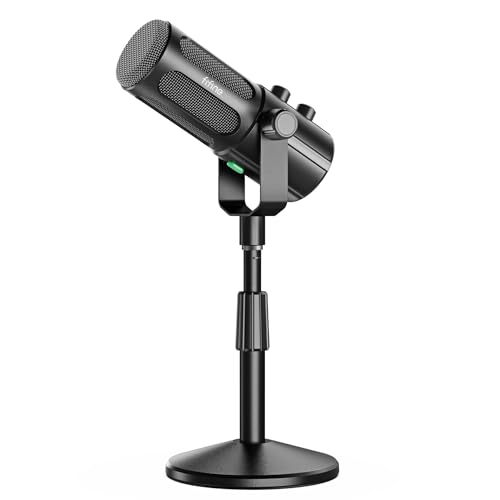 | FIFINE AmpliTank TANK6S Vocal Dynamic Microphone XLR/USB Des 👑 Premium Pick | 8.6/10 |
View on Amazon Free Shipping & 30-Day Returns |
 | MAONO A04 Gen2 XLR/USB Condenser Microphone Kit for PC Podca | 8.4/10 |
View on Amazon Free Shipping & 30-Day Returns |
 | TONOR Dynamic Podcast Microphone for Content Creators, Cardi | 8.1/10 |
View on Amazon Free Shipping & 30-Day Returns |
 | MAONO A04 USB Microphone, 192kHz/24Bit Condenser Mic Kit for | 7.9/10 |
View on Amazon Free Shipping & 30-Day Returns |
 | MAONO DGM20S USB Gaming Microphone for PC, Noise Reduction C | 7.5/10 |
View on Amazon Free Shipping & 30-Day Returns |
 | CMTECK USB Computer Microphone G009, Noise-Cancelling Record 💵 Budget Pick | 6.8/10 |
View on Amazon Free Shipping & 30-Day Returns |
📋 How We Evaluated
Each microphone was evaluated on build quality, audio performance, connectivity flexibility, and value for creators. Noise handling, onboard controls, and software support weighted heavily in the scoring. Setup simplicity and suitability for podcasts, streaming, and voice-over rounded out the assessment.
Detailed Reviews
MAONO PD200W Hybrid Wireless Podcast Microphone for PC, Dyna🏆 Editor’s Pick
| Capsule | 30mm dynamic |
| Connectivity | Wireless, USB, XLR |
| Signal-to-Noise Ratio | 82dB |
| Max SPL | 128dB |
What We Found
The MAONO PD200W offers three connection paths: wireless, USB, and XLR. The wireless mode frees creators from desk clutter. XLR supports professional interfaces when you are ready to upgrade. A 30mm dynamic capsule produces a warm broadcast voice. It achieves an 82dB signal-to-noise ratio.
The mic handles up to 128dB SPL without distortion, so loud moments stay clean. The cardioid pattern and three-stage noise cancellation tame untreated-room echo impressively. Duo podcasters benefit from a single receiver pairing two mics onto separate tracks.
MaonoLink software adds EQ, reverb, and four preset modes via PC or phone. Camera-sync recording eliminates post-production alignment, though camera accessories cost extra.
💬 My Take
My read is that the PD200W is the most flexible creator microphone here. The wireless freedom seals the deal for me. I would pick this when recording duo podcasts without hesitation.
Who It’s For
This mic suits interviewers, duo podcasters, and roving creators who want cable-free flexibility. Mobile journalists can record directly to camera in sync, saving editing time. Home podcasters in untreated rooms gain from the strong noise cancellation. The hybrid design future-proofs a starter setup.
Beginners can start on USB and later upgrade to XLR interfaces.
✅ Pros
- Wireless, USB, and XLR modes cover every recording scenario
- Dual-mic receiver records each voice on separate tracks for easy editing
- Three-stage noise cancellation delivers broadcast-ready clarity in untreated rooms
❌ Cons
- Camera and Lightning accessories are sold separately
- Wireless mode adds cost compared with wired-only rivals
- MaonoLink tuning takes time to learn for first-time users
MAONO PD200W Hybrid Wireless Podcast Microphone for PC, Dyna
| Capsule | 30mm dynamic |
| Connectivity | Wireless, USB, XLR |
| Signal-to-Noise Ratio | 82dB |
| Max SPL | 128dB |
What We Found
This MAONO PD200W listing mirrors the Editor’s Pick hardware. It is a hybrid wireless, USB, and XLR dynamic microphone. The 30mm capsule produces studio-quality vocals with an 82dB signal-to-noise ratio. It also handles 128dB SPL. Three-stage noise cancellation and cardioid pickup deliver clean sound without a soundproof booth.
MaonoLink enables EQ, reverb, and four tuned presets from PC or phone. The receiver supports two mics for duo podcasts with separate-track recording. Camera-sync capture removes alignment work in post-production. Buyers should compare this listing’s price and included accessories against the bundle version. Contents may differ significantly between them.
💬 My Take
This is the same excellent PD200W microphone, so the buying decision comes down to price. I would check the packaging carefully before committing. Verify included accessories before choosing between listings.
Who It’s For
Solo podcasters and interviewers who want the PD200W experience without the two-mic bundle will find this listing ideal. Mobile creators recording to camera benefit most from the wireless design. Streamers juggling devices can switch between phone, tablet, and computer seamlessly. Always verify what accessories ship with this specific listing.
The base package may exclude items bundled elsewhere.
✅ Pros
- Three connectivity modes suit every recording workflow
- Strong noise cancellation handles untreated rooms
- Separate-track dual recording simplifies interview editing
❌ Cons
- Identical hardware available in bundle listings with extras
- Camera accessories sold separately
- Wireless receiver adds desk clutter when used
FIFINE K688S XLR/USB Podcast Dynamic Microphone with Desktop🥈 Runner-Up
| Capsule | Dynamic, cardioid |
| Signal-to-Noise Ratio | 80dB |
| Max SPL | 120dB |
| Connectivity | USB and XLR |
What We Found
The FIFINE K688S is a dynamic microphone built for real-world, untreated rooms. The 80dB signal-to-noise ratio keeps self-noise essentially inaudible. A 120dB SPL rating captures loud sources without distortion, so energetic shoutouts stay clean. Cardioid rejection plus multi-layer noise reduction keeps voice centered and natural.
USB mode works instantly with computers and phones. XLR mode connects to interfaces for growth. The mute button, gain knob, and 3.5mm monitoring jack sit on the body for fast control. The included adjustable desktop stand features a built-in shock mount and windscreen.
Close speaking suppresses plosives naturally without extra filtration.
💬 My Take
I would pick the K688S as the best all-around option for solo creators in real rooms. Buy it if your space lacks acoustic treatment. My read is that it simply works.
Who It’s For
Podcasters and streamers recording in ordinary bedrooms or home offices are the perfect audience. The dynamic capsule ignores fan hum, keyboard clatter, and room echo. Condenser recordings often struggle with those exact issues. Phone-based creators benefit from direct USB connection without adapters.
I view it as a long-term microphone that survives every upgrade. It offers outstanding lasting value from beginner to interface-based studio.
✅ Pros
- Dynamic capsule excels in untreated rooms with minimal background noise
- Onboard mute, gain, and monitoring enable complete live control
- Included stand, shock mount, and windscreen save accessory spending
❌ Cons
- Dynamic output needs close speaking distance
- Desktop stand limits positioning versus a boom arm
- XLR cable must be purchased separately
MAONO PD200W Hybrid Wireless Podcast Equipment Bundle for 2💰 Best Value
| Contents | Two PD200W mics plus receiver |
| Capsule | 30mm dynamic |
| Recording | Separate track per mic |
| Connectivity | Wireless, USB, XLR |
What We Found
This bundle packages two PD200W microphones with a single shared receiver. It targets duo podcasters directly. Each 30mm dynamic capsule records to its own track for precise editing. The 82dB signal-to-noise ratio and 128dB SPL ceiling handle expressive conversation cleanly.
Three-stage noise cancellation minimizes background noise and room echo without a booth. Wireless mode frees both hosts from cables. USB and XLR modes cover desk and studio setups. Camera-sync recording captures both voices aligned with video instantly. MaonoLink provides four presets plus EQ and reverb control.
For two-person shows, buying this bundle beats purchasing two separate kits.
💬 My Take
For two-person podcasts, I see this bundle as the obvious value play. Solo buyers should skip it entirely. I would grab the single PD200W instead if it is just me recording.
Who It’s For
Co-hosted podcasts and two-person interview shows are the clear audience here. Buying the bundle costs less than two individual mics. It also guarantees receiver compatibility. Remote interviewers recording in-person guests gain separate tracks for professional editing. Solo creators should buy the single unit instead. Duo shows get exceptional convenience here.
✅ Pros
- Two-mic bundle undercuts buying units separately
- Separate tracks per voice enable precise editing
- Camera-sync recording eliminates post-production alignment
❌ Cons
- Overkill and costly for solo creators
- Camera and Lightning accessories sold separately
- Shared receiver becomes a single point of failure
FIFINE AmpliTank TANK6S Vocal Dynamic Microphone XLR/USB Des👑 Premium Pick
| Capsule | Dynamic, end-address |
| Sample Rate | 192kHz |
| Signal-to-Noise Ratio | 70dB |
| Stand | Height-adjustable metal |
What We Found
The FIFINE AmpliTank TANK6S is a vocal-focused dynamic microphone with dual XLR and USB interfaces. The 192kHz sampling rate preserves high-frequency detail. Its 70dB SNR keeps voice cutting through noise. Multi-layer physical noise reduction filters background sound without software processing.
A glow-mute button turns red when active, giving clear visual feedback on stream. The gain knob and separate headphone volume enable zero-latency monitoring during broadcasts. The height-adjustable metal stand tilts toward the mouth, and its heavy base stays planted.
Keep the end-address capsule 2 to 6 inches from the source for best results.
💬 My Take
The TANK6S feels like a step-up mic for creators ready to invest in build quality. Streamers will love the physical mute light. Frugal buyers should check the K688S first, though. My read is that both serve different budgets well.
Who It’s For
Vocalists, serious podcasters, and streamers who want premium build and confident controls will appreciate the TANK6S. The sturdy metal construction and heavy base feel professional on any desk. USB owners gain XLR upgrade potential without replacement cost. Buyers should compare against the cheaper K688S.
Both come from FIFINE with similar hybrid designs, but they have differing control layouts.
✅ Pros
- Premium metal build with stable heavy-duty base
- Glow-mute button gives clear live status feedback
- Physical multi-layer noise reduction needs no software
❌ Cons
- Lower 70dB SNR than some rivals
- Requires close 2 to 6 inch speaking distance
- Heavier build reduces portability
MAONO A04 Gen2 XLR/USB Condenser Microphone Kit for PC Podca
| Capsule | 16mm electret condenser |
| Sample Rate | 192kHz/24-bit |
| Frequency Response | 30Hz-16kHz |
| Connectivity | USB and XLR |
What We Found
The MAONO A04 Gen2 refines the original with dual USB and XLR connectivity. The 16mm condenser captures warm, detailed vocals at 192kHz/24-bit. It has a smooth 30Hz to 16kHz response. Cardioid rejection eliminates off-axis noise effectively.
MaonoLink software adds gain control, adjustable noise reduction, scene EQ presets, a compressor, and a limiter. The bundle includes a pop filter and windscreen that suppress noise without muffling sound. USB mode enables instant plug-and-play recording. XLR mode requires phantom power for interfaces.
The 2 to 6 inch working distance rewards disciplined mic technique. Xbox users are out of luck.
💬 My Take
My read is that the Gen2 earns its upgrade status with genuinely useful software. The hybrid connectivity makes it highly practical. I would pick this as the smartest condenser bundle for growing creators.
Who It’s For
Growing creators who want software control now and interface compatibility later are the ideal buyers. Voice-over artists benefit from the flat response and compressor tools in MaonoLink. Home studios with light acoustic treatment will hear the condenser detail clearly. It bridges the beginner and intermediate stages better than most bundles.
I recommend it for creators planning to scale up.
✅ Pros
- MaonoLink offers compressor, limiter, and adjustable noise reduction
- Dual USB and XLR outputs support future studio upgrades
- Warm vocal character flatters speech and voice-over work
❌ Cons
- XLR mode needs separate phantom power
- Condenser sensitivity picks up untreated-room reflections
- No Xbox compatibility
TONOR Dynamic Podcast Microphone for Content Creators, Cardi
| Type | Dynamic, cardioid |
| Audio Modes | Bass roll-off, vocal clarity, mid-range |
| Connectivity | USB and XLR |
| Monitoring | 3.5mm headphone jack |
What We Found
The TONOR dynamic microphone offers three selectable audio modes: bass roll-off, vocal clarity, and mid-range emphasis. AI noise reduction filters low-frequency background noise for cleaner takes. Dual USB and XLR outputs let buyers start simple and upgrade later. You never have to replace the microphone itself.
Independent microphone and headphone volume controls provide precise monitoring through the 3.5mm jack. USB mode connects directly to computers, PS4, and PS5. XLR mode pairs with sound cards. The three EQ modes adapt quickly to different rooms and voices.
XLR cables are not included, which adds hidden cost to the upgrade path.
💬 My Take
I like how TONOR packs smart mode flexibility into an affordable dynamic body. It lacks bundle accessories, which is a drawback. Still, my read is that the core microphone earns its price easily.
Who It’s For
Creators who record in varied environments will value the instant EQ mode switching. Vocal clarity mode suits soft speakers, while bass roll-off tames boomy rooms. Budget-conscious streamers can begin on USB and transition to XLR interfaces later. It suits voice-focused work rather than music.
The AI noise reduction helps noisy apartments and shared living spaces.
✅ Pros
- Three EQ modes adapt to different rooms and voices
- AI noise reduction cleans low-frequency background hum
- Independent gain and headphone volume controls
❌ Cons
- XLR cable excluded from the kit
- No Xbox support in either mode
- AI noise reduction can color natural voice tone
MAONO A04 USB Microphone, 192kHz/24Bit Condenser Mic Kit for
| Capsule | 16mm electret condenser |
| Sample Rate | 192kHz/24-bit |
| Accessories | Pop filter, windscreen, shock mount, boom arm |
| Compatibility | PC, PS4, PS5, most phones |
What We Found
The MAONO A04 bundle delivers strong value with a complete accessory package. The 16mm electret condenser supports 192kHz/24-bit sampling for detailed, bass-rich voice capture. A flat frequency response suits speech, voice-over, and podcast work.
The kit includes a pop filter, foam windscreen, shock mount, and adjustable boom arm with desk clamp. A magnet ring on the USB cable reduces electrical interference effectively. Plug-and-play setup works on PC, PS4, PS5, and most phones without drivers.
Best results come from a 2 to 6 inch speaking distance. Note that this original version lacks MaonoLink support, which the Gen2 adds.
💬 My Take
I consider the A04 a classic starter kit with genuine studio intent. Grab it if accessories matter to you. Just make sure your room stays reasonably quiet first.
Who It’s For
First-time podcasters and YouTubers get everything needed to start recording on day one. The included boom arm and shock mount save roughly the cost of separate accessories. It suits quiet home offices where the condenser detail shines. Buyers wanting software control should step up to the Gen2.
As a starter bundle, I think this kit remains hard to beat.
✅ Pros
- Complete accessory bundle removes extra purchases
- High 192kHz/24-bit resolution captures detailed vocals
- Anti-interference magnet ring keeps recordings clean
❌ Cons
- Condenser pickup demands a quiet room
- Original version lacks MaonoLink software support
- Desk clamp needs a surface under 2.1 inches thick
MAONO DGM20S USB Gaming Microphone for PC, Noise Reduction C
| Type | Cardioid condenser |
| Lighting | Controllable RGB |
| Monitoring | 3.5mm zero-latency jack |
| Compatibility | PC, Mac, PS4, PS5 |
What We Found
The MAONO DGM20S targets gamers first and content creators second. One-click noise reduction cuts background distractions during Discord chat and streaming. The cardioid pattern keeps voice focused for team communication. Controllable RGB lighting offers multiple colors and modes, and lights can switch off entirely.
The gain knob and one-touch mute provide quick live adjustments. A 3.5mm headphone jack enables zero-latency monitoring. The metal boom arm, shock mount, and removable pop filter come included, positioning the mic without blocking the screen. USB setup is instant on PC, Mac, and PS5.
Noise software tuning is limited to Windows users only.
💬 My Take
I would shortlist the DGM20S for anyone building a gaming stream setup. The smart controls and included accessories make sense. Audio purists will prefer a dynamic alternative, but gamers should be happy.
Who It’s For
Streamers and competitive gamers who broadcast voice constantly will appreciate the fast controls. The RGB aesthetic complements themed battle stations, and the lights-off mode keeps setups clean. It handles Discord, Twitch, and casual recording capably. Creators needing deep software editing should look elsewhere.
As a gaming-first microphone, I think it hits its target well.
✅ Pros
- One-click noise reduction simplifies live streaming
- Included boom arm and shock mount complete the setup
- Gain knob enables quick on-stream level adjustments
❌ Cons
- RGB lighting feels unnecessary for audio-focused buyers
- Noise software only supports Windows
- Not compatible with Xbox
CMTECK USB Computer Microphone G009, Noise-Cancelling Record💵 Budget Pick
| Type | Omnidirectional condenser |
| Connectivity | USB plug-and-play |
| Controls | Mute button with LED |
| Compatibility | Windows, Mac, PS4 |
What We Found
The CMTECK G009 is a compact omnidirectional condenser built for casual use. The CCS2.0 smart chip applies active noise cancellation to reduce background hiss. A built-in pop filter softens plosives, though the tiny capsule lacks studio depth.
The mute button includes a helpful LED that shows green for live and red for muted. An adjustable metal gooseneck rotates 360 degrees for comfortable positioning. Setup is genuinely plug-and-play on Windows, Mac, and PS4 with no drivers. The stable mini base maximizes desk space.
It handles calls, dictation, and online classes well. Linux, Android, and Raspberry Pi are unsupported.
💬 My Take
I see the G009 as a sensible budget solution for calls and casual recording. Serious creators should look elsewhere. For everyone else, my read is that it delivers real value.
Who It’s For
This mic fits students, remote workers, and casual streamers who need affordable clarity. Dictation users benefit from the omnidirectional pickup and simple controls. It is not ideal for serious music or broadcast work. As a cheap upgrade from laptop audio, it performs admirably.
The compact footprint suits crowded or shared desks perfectly.
✅ Pros
- Active noise cancellation works well for the price
- LED-indicated mute button prevents accidental live audio
- Flexible gooseneck positions easily and saves desk space
❌ Cons
- Omnidirectional pattern captures room noise alongside voice
- No XLR option limits future upgrades
- Lacks Linux and Android compatibility
What to Look For Before Buying
Desktop microphones vary more than their spec sheets suggest. Matching the microphone to your room and workflow matters most to me. A great mic in the wrong environment still sounds mediocre. These considerations will steer any creator toward the right purchase.
Check Dynamic Versus Condenser Capsules
Dynamic capsules reject room noise and suit untreated bedrooms, apartments, and shared spaces. Condenser capsules capture more detail and nuance but demand quiet, treated environments. Most beginners get better results from dynamic microphones because real rooms are never silent. Choose a condenser if you record vocals in a treated space.
They also work well when you want maximum detail for voice-over. Assess your room honestly before committing either way.
Value USB Now, XLR Later
Hybrid microphones with both USB and XLR outputs protect your investment as skills grow. USB mode works instantly with computers and phones without extra hardware. XLR mode connects to audio interfaces and mixers for pro-level signal chains. Buying hybrid means upgrading your interface without replacing the microphone.
I advise avoiding USB-only mics if professional audio work is on your roadmap.
Rating Onboard Controls and Monitoring
Physical mute buttons, gain knobs, and 3.5mm headphone jacks prevent embarrassing live moments. Zero-latency monitoring lets you hear exactly what the microphone records. LED indicators confirm mute status at a glance during streams. Software control adds EQ, compression, and noise reduction. Check platform support first, though.
Creators who broadcast live should prioritize hardware controls over app-dependent features.
Verify Bundles and Hidden Accessory Costs
Many microphones ship without boom arms, shock mounts, pop filters, or XLR cables. Compare bundle listings against base listings before buying, since contents vary significantly. Accessory costs can add substantially to a seemingly cheap microphone. Wireless kits often exclude camera and mobile adapters that creators actually need.
Total the complete setup cost, not just the microphone price, when comparing options.
Frequently Asked Questions
Is a dynamic or condenser microphone better for home content creation?
Dynamic microphones usually win in untreated home environments because they reject room noise and echo. Condensers capture more detail but also capture fans, traffic, and reflections. Choose a condenser only if your room is quiet and treated. I suggest most beginners start with a dynamic model like the FIFINE K688S.
Do I need XLR if USB already works?
Not immediately, but XLR support future-proofs your purchase. USB delivers excellent quality for podcasts, streams, and calls today. An interface and XLR connection become valuable when you add preamps, mixers, or advanced processing. Hybrid microphones let you upgrade without replacing the microphone itself.
How close should I sit to a desktop dynamic microphone?
Most dynamic microphones perform best at 2 to 6 inches from your mouth. Close positioning maximizes signal and helps the cardioid pattern reject background noise. Use a pop filter to control plosives at short distances. Condensers tolerate greater distances but still benefit from consistent placement.
Can one receiver really run two wireless microphones at once?
Yes, the MAONO PD200W system pairs two microphones to a single receiver. Each microphone records to its own separate track for independent editing. The system also captures audio and video in sync directly to compatible cameras. Camera and Lightning accessories are sold separately, so budget for those additions.
Does noise reduction software degrade voice quality?
Modern noise reduction is generally transparent at moderate settings. Aggressive levels can dull natural tone or introduce artifacts, especially with AI processing. Adjust strength gradually and monitor through headphones to find the balance. Physical design features like cardioid patterns and windscreens reduce noise without any processing cost.
🎯 Final Verdict
I recommend the MAONO PD200W for content creators who want maximum flexibility. It combines wireless freedom, USB convenience, and XLR upgrade potential in one body. Three-stage noise cancellation and separate-track dual recording solve real podcasting problems directly.
Creators on tighter budgets or in untreated rooms should choose the FIFINE K688S instead. It delivers similarly clean dynamic sound with excellent onboard controls. Stop settling for laptop audio, and order the microphone that matches your workflow today.

James Dimento is a Chief-in-Editor of SoundUnify. He is a headphone enthusiast and creative writer passionate about audio technology. He has three years of experience writing about headphones and sound quality and is responsible for creating reviews and taking care of all administration.