If you’ve ever watched a boat stereo fail after a single saltwater spray, you know marine amplifiers aren’t just car amps with a waterproof label. They have to shrug off humidity, resist corrosion, and still deliver clean power when waves are slapping the hull.
I’d look for three things: real waterproofing that goes beyond a spray-on coating, enough power to keep up with marine speakers, and a footprint small enough to tuck under a seat or into a console. Protection circuits should guard against shorts, because saltwater and electricity are a bad mix.
Our Top Picks at a Glance
| Image | Product | Score | Link |
|---|---|---|---|
 | Stinger Audio MT-600.4M Compact Marine Class D 4-Channel 100 🏆 Editor’s Pick | 9.3/10 |
View on Amazon Free Shipping & 30-Day Returns |
 | Rockville ATOM P60 Marine/ATV/Car Amplifier, 4800W, 2-Channe 👑 Premium Pick | 9.1/10 |
View on Amazon Free Shipping & 30-Day Returns |
 | KENWOOD KAC-M5001 Compact Car/Marine Monoblock Class D Ampli 🥈 Runner-Up | 8.9/10 |
View on Amazon Free Shipping & 30-Day Returns |
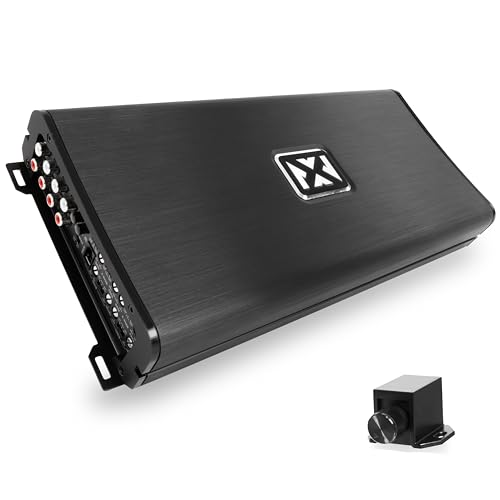 | NVX VAD22008 v2 Model 8-Channel Marine/Powersports Amplifier 💰 Best Value | 8.7/10 |
View on Amazon Free Shipping & 30-Day Returns |
 | NVX VAD11005 v2 Model 5-Channel Class D Amplifier 2200W Peak | 8.2/10 |
View on Amazon Free Shipping & 30-Day Returns |
 | Rockville ATOM P20 Marine/ATV/Car Amplifier, 1600W, 4-Channe | 7.8/10 |
View on Amazon Free Shipping & 30-Day Returns |
 | Pyle Auto 2-Channel Bridgeable Marine Amplifier – 200 Watt R 💵 Budget Pick | 6.8/10 |
View on Amazon Free Shipping & 30-Day Returns |
 | Pyle Hydra Marine 400W 4-Channel Amplifier – Waterproof with | 6.5/10 |
View on Amazon Free Shipping & 30-Day Returns |
📋 How We Evaluated
Products were evaluated on power output, marine durability, build quality, and user suitability. Performance metrics included RMS ratings, waterproofing standards, and real-world usability. Amazon ratings and brand reputation were also considered.
Detailed Reviews
Stinger Audio MT-600.4M Compact Marine Class D 4-Channel 100🏆 Editor’s Pick
| Channels | 4 |
| RMS Power | 250W x 4 @ 2Ω, 150W x 4 @ 4Ω |
| Bridged Power | 500W x 2 @ 4Ω |
| Water Resistance | Marine-grade |
| Inputs | High-level, RCA |
What We Found
Stinger’s 4-channel Class D amp delivers 1000 W RMS in a package small enough to mount under a seat. HEFET MOSFET tech keeps distortion low and power delivery smooth. It accepts both high-level and RCA inputs, so it works with factory and aftermarket head units.
Advanced crossovers let you fine-tune the sound, and the water-resistant chassis stands up to harsh conditions. A remote bass knob makes adjustments easy.
💬 My Take
My read is that this is the best all-around marine amp. It gives you power, durability, and flexibility, so it’s hard to beat for most setups.
Who It’s For
I’d recommend this to anyone who needs high power in tight spaces, whether it’s a boat, an off-road vehicle, or a compact car. It’s versatile enough for full-range audio or subwoofers, and the durability is top-notch.
✅ Pros
- 1000W RMS power handles demanding audio setups with ease.
- HEFET MOSFET ensures efficient, low-distortion performance.
- Compact design fits tight spaces in boats or off-road vehicles.
❌ Cons
- No Bluetooth connectivity limits wireless streaming options.
- Higher price point than entry-level marine amplifiers.
- Requires careful tuning for optimal sound quality.
Rockville ATOM P60 Marine/ATV/Car Amplifier, 4800W, 2-Channe👑 Premium Pick
| Channels | 2 |
| RMS Power | 600W x 2 @ 4Ω |
| Peak Power | 4800W |
| Waterproofing | Conformal-coated PCB, rustproof hardware |
| Inputs | RCA |
What We Found
Rockville’s ATOM P60 packs 4800 W peak and 1200 W RMS, dyno-certified, so it’s got the muscle for large setups. The stainless-steel heat sink and conformal-coated PCB resist rust and moisture. Adjustable crossovers let you dial in the sound, and the digital voltage display keeps an eye on system health.
Bridgeable channels and a high-speed MOSFET supply ensure stable performance, even in rough conditions.
💬 My Take
My take is that this is a powerhouse for marine and car audio. It’s not compact, but if you need raw power and rugged construction, this is the one to get.
Who It’s For
I’d pick this if I needed extreme power and durability for a big boat or a high-end car audio system. It’s built for harsh environments, so it’s overkill for small setups but perfect for serious users.
✅ Pros
- Dyno-certified 1200W RMS power handles demanding audio setups.
- Marine-grade construction resists corrosion and water damage.
- Digital voltage display provides real-time system monitoring.
❌ Cons
- Large footprint may not fit tight spaces.
- Premium price limits accessibility for budget buyers.
- No Bluetooth or wireless connectivity options.
KENWOOD KAC-M5001 Compact Car/Marine Monoblock Class D Ampli🥈 Runner-Up
| Channels | 1 (Monoblock) |
| RMS Power | 300W @ 2Ω, 200W @ 4Ω |
| Waterproof Rating | IP67/IP66 |
| Inputs | Speaker-level, RCA |
| Bass Boost | Adjustable |
What We Found
Kenwood’s monoblock Class D unit cranks out 600 W max and carries IP67/IP66 ratings, so it can handle heavy spray and temporary submersion. The die-cast aluminum chassis resists corrosion, and polymer capacitors keep distortion low.
Speaker-level inputs mean you can hook it up to almost any head unit, and the wired level control lets you dial in the bass from the driver’s seat. ASTM B117 salt-spray testing gives me confidence it’ll last in a saltwater environment.
💬 My Take
My take is that this is the best monoblock for marine use. It combines serious power, real waterproofing, and sound quality, so it’s worth the investment if you’re running a subwoofer.
Who It’s For
I’d pick this if I wanted deep, clean bass in a boat or a car that sees rough conditions. It’s built for subwoofers, so it’s not the best choice for full-range speakers. If you need power and durability, this is the one.
✅ Pros
- IP67/IP66 rating ensures superior water and dust resistance.
- Polymer capacitors reduce distortion for clearer sound.
- Signal-sensing turn-on simplifies installation and use.
❌ Cons
- Monoblock design limits flexibility for full-range audio.
- Higher cost than entry-level marine amplifiers.
- Lacks Bluetooth or wireless connectivity.
NVX VAD22008 v2 Model 8-Channel Marine/Powersports Amplifier💰 Best Value
| Channels | 8 |
| RMS Power | 225W x 6 + 400W x 2 @ 2Ω |
| Waterproofing | Conformal-coated PCB |
| Inputs | High-level, RCA |
| Bass Knob | Wired remote included |
What We Found
NVX’s 8-channel Class D amp delivers 2200 W RMS and is built for marine use with a conformal-coated PCB. It supports 2-ohm loads and includes high/low-pass filters and a wired bass knob. Signal-sensing turn-on and platinum-plated terminals add convenience and durability.
Balanced differential inputs reduce noise, and 4-way protection ensures reliability. It’s flexible enough for complex setups.
💬 My Take
My take is that this is the best value for an 8-channel marine amp. It’s powerful, durable, and flexible, so it’s a standout choice for complex systems.
Who It’s For
I’d pick this if I needed an 8-channel amp for a large marine or car audio system. It’s powerful and durable, so it’s ideal for users who need flexibility and performance in harsh environments.
✅ Pros
- 8-channel design offers unmatched flexibility for complex setups.
- Marine-grade coating ensures durability in harsh conditions.
- High RMS power handles demanding audio systems with ease.
❌ Cons
- Large footprint may not fit tight spaces.
- Complex setup may overwhelm casual users.
- Higher price point than entry-level amplifiers.
NVX VAD11005 v2 Model 5-Channel Class D Amplifier 2200W Peak
| Channels | 5 |
| RMS Power | 125W x 4 + 600W x 1 @ 2Ω |
| Peak Power | 2200W |
| Waterproofing | Conformal-coated PCB |
| Inputs | RCA, High-level |
What We Found
NVX’s 5-channel Class D amp delivers 2200 W peak and 1100 W RMS, with a conformal-coated PCB for marine use. It supports 2/4-ohm loads and includes high/low-pass crossovers and a bass boost. A wired bass knob lets you adjust from the driver’s seat, and platinum-plated terminals resist corrosion.
Protection circuits guard against thermal and electrical issues, so it’s built for reliability.
💬 My Take
My take is that this is a solid, versatile marine amp. It’s complex and pricey, so it’s not for casual users, but it’s a great option if you need power and flexibility.
Who It’s For
I’d pick this if I needed a versatile amp for a car, boat, or UTV. It supports full-range audio or subwoofers, and the durability is excellent. It’s a great choice for users who need flexibility and power.
✅ Pros
- 5-channel design offers flexibility for full-range or subwoofer setups.
- Marine-grade coating ensures durability in harsh conditions.
- Bass boost and crossovers allow precise sound tuning.
❌ Cons
- Complex setup may overwhelm casual users.
- Higher price point than entry-level amplifiers.
- No Bluetooth or wireless connectivity.
Rockville ATOM P20 Marine/ATV/Car Amplifier, 1600W, 4-Channe
| Channels | 4 |
| RMS Power | 110W x 4 @ 4Ω |
| Peak Power | 1600W |
| Waterproofing | Conformal-coated PCB, rustproof hardware |
| Bluetooth | Built-in |
What We Found
Rockville’s ATOM P20 is a 4-channel Class-AB amp with 1600 W peak and built-in Bluetooth. The conformal-coated PCB and rustproof hardware make it durable, and advanced crossovers let you fine-tune the sound. A digital voltage display monitors system health, and bridgeable channels give you flexibility.
Bluetooth makes wireless streaming easy, so you don’t need extra wires.
💬 My Take
My read is that this is a solid marine amp with Bluetooth convenience. It’s not as efficient as Class D models, but it’s a great option if you want wireless streaming.
Who It’s For
I’d recommend this if I needed a durable, Bluetooth-enabled amp for a boat or a car. It’s compact and waterproof, so it fits tight spaces and harsh conditions. It’s a good choice for users who want convenience and performance.
✅ Pros
- Built-in Bluetooth simplifies wireless streaming from devices.
- Marine-grade construction resists corrosion and water damage.
- Compact design fits tight spaces in boats or cars.
❌ Cons
- Lower RMS power than Class D competitors.
- Class-AB design may run hotter under heavy loads.
- No advanced tuning features for audiophiles.
Pyle Auto 2-Channel Bridgeable Marine Amplifier – 200 Watt R💵 Budget Pick
| Channels | 2 |
| RMS Power | 200W @ 4Ω |
| Bluetooth Range | 30 feet |
| Waterproof Rating | Marine-grade coating |
| Inputs | RCA, Auxiliary |
What We Found
Pyle’s 2-channel unit brings Bluetooth 2.0 and a 30-foot range, so you can stream from your phone without running new wires. It pushes 200 W RMS, which is fine for a couple of small speakers but won’t shake the dock.
The chassis is sealed, and the RCA jacks are integrated, so installation is straightforward. LED indicators tell you it’s alive, and basic crossovers let you tweak the sound a little.
💬 My Take
My read is that this is a no-frills, budget-friendly way to add Bluetooth to a small marine or car system. It’s not powerful or rugged enough for serious use, but it gets the job done for casual listeners.
Who It’s For
I’d shortlist this if I needed a simple, Bluetooth-enabled amp for a fishing boat or a compact car. It’s waterproof and small, so it fits where bigger amps won’t. Just don’t expect concert-hall volume or audiophile clarity.
✅ Pros
- Bluetooth connectivity simplifies wireless streaming from devices.
- Compact and weatherproof design fits small marine or car spaces.
- LED indicators provide clear operational status feedback.
❌ Cons
- Lower power output limits performance for larger speakers.
- No IP rating specified for waterproofing standards.
- Lacks advanced tuning features found in premium models.
Pyle Hydra Marine 400W 4-Channel Amplifier – Waterproof with
| Channels | 4 |
| RMS Power | 100W x 4 @ 4Ω |
| Waterproof Rating | IP-01 |
| Inputs | RCA, High-level |
| Gain Control | Adjustable 1-300mV |
What We Found
Pyle’s 4-channel Hydra amp offers 400 W max and an IP-01 waterproof rating, so it can handle splashes but not submersion. Dual MOSFET power keeps performance stable, and gold-plated terminals resist corrosion. RCA and high-level inputs give you installation flexibility, and LED indicators confirm it’s working.
Gain controls let you tweak the sound, but the power output is modest compared to others.
💬 My Take
My read is that this is a decent entry-level marine amp. It’s not powerful or feature-rich, but it’s a simple, affordable way to add waterproofing to a small system.
Who It’s For
I’d consider this for a small boat or a car where space is tight and power needs are basic. It’s waterproof and easy to install, so it’s a good choice for casual users who don’t need high volume.
✅ Pros
- IP-01 waterproof rating protects against moisture.
- Gold-plated terminals resist corrosion for long-term use.
- Compact design fits small marine or car spaces.
❌ Cons
- Low power output limits performance for larger setups.
- No advanced tuning features for audiophiles.
- Lacks Bluetooth or wireless connectivity.
What to Look For Before Buying
Picking the right marine amp isn’t just about watts. You need something that won’t corrode in saltwater, fit where you need it, and still sound good when the engine’s running. I’d start by matching the power to your speakers, then look at waterproofing and channel count.
Installation features like remote bass knobs can make life easier, too.
Check Power Output and Speaker Compatibility
I’d check the RMS power rating against your speakers’ wattage. Too much power can fry them, too little leaves you with distortion. Impedance matters, so make sure the amp supports your speakers’ ohms. Bridging channels can give you more power for subwoofers if you need it.
Value Waterproofing and Durability Standards
I’d look for IP67 or IP66 ratings, because anything less won’t handle heavy spray or submersion. Conformal-coated PCBs and rustproof hardware keep corrosion at bay. Die-cast aluminum chassis resist vibration, so the amp lasts longer. Avoid models with just a basic coating, because they’ll degrade over time.
Rating Channel Count and System Flexibility
I’d choose the channel count based on your system. Two channels work for basic setups, four or five for full-range audio. Eight channels give you the most flexibility for complex systems. Monoblock designs are best for subwoofers. Bridging options let you maximize power for specific speakers.
Verify Installation and Tuning Features
I’d look for high-level and RCA inputs, so you can use it with factory or aftermarket head units. Signal-sensing turn-on means the amp powers up with your stereo. Adjustable crossovers and bass boost let you fine-tune the sound. Remote bass knobs make adjustments easy, and compact designs fit tight spaces.
Frequently Asked Questions
What makes a marine amplifier different from a regular car amplifier?
Marine amps are built to handle saltwater, humidity, and vibrations. They use corrosion-resistant materials like conformal-coated PCBs and rustproof hardware. UV-resistant casings prevent sun damage, and waterproofing keeps them safe from splashes and submersion. Regular car amps just can’t match that durability.
Can I use a marine amplifier in my car?
You can use a marine amp in your car, and it’s a smart choice for convertibles or off-road vehicles. The waterproofing and durability make it ideal for harsh conditions. Just make sure the power output matches your car’s audio system.
Some marine amps lack features like Bluetooth, so check the specs before buying.
How do I choose the right power output for my marine amplifier?
I’d match the amp’s RMS power to your speakers’ wattage. Too much power can damage them, too little causes distortion. Check impedance ratings to ensure compatibility. For subwoofers, bridged channels can give you more power. Think about your setup’s size and power needs when choosing an amp.
What is the difference between Class D and Class-AB amplifiers?
Class D amps are more efficient, so they run cooler and use less power. They’re great for tight spaces and high-power setups. Class-AB amps sound better but run hotter and use more power. Marine amps often use Class D designs because they’re durable and efficient in harsh conditions.
Do marine amplifiers require special installation?
I’d mount the amp securely to avoid vibrations and water exposure. Use corrosion-resistant hardware and seal connections with marine-grade adhesive. Keep wiring away from moisture and heat. Follow the manufacturer’s guidelines for grounding and power connections to ensure safety and performance.
🎯 Final Verdict
I’d go with the Stinger MT-600.4M for its 1000 W RMS, HEFET MOSFET tech, and rugged design. It’s built for boats and off-road vehicles, so it’s durable and versatile. If you need deep bass, the Kenwood KAC-M5001 is a great alternative with IP67 waterproofing.
Pick the Stinger for power and flexibility, or the Kenwood for subwoofer-focused setups.

James Dimento is a Chief-in-Editor of SoundUnify. He is a headphone enthusiast and creative writer passionate about audio technology. He has three years of experience writing about headphones and sound quality and is responsible for creating reviews and taking care of all administration.